
By Aline Aguiar and Mariana Clauzet – Ilhas do Rio Project / Instituto Mar Adentro
In June, we traveled to Nice, France, for the 3rd United Nations Ocean Conference (UNOC3). It was an intense five-day event that brought together heads of state, scientists, civil society representatives, and the private sector, all working toward a common goal: concrete actions for the conservation and sustainable use of the ocean, a key element of SDG 14 (Life Below Water).
For us, as Brazilians engaged in ocean advocacy, UNOC3 had even deeper meaning. Brazil is set to take center stage on the global climate agenda by hosting the 30th Conference of the Parties to the UN Framework Convention on Climate Change (COP30). A landmark event happening in Belém in November 2025.
Climate, Ocean, and Brazil in the Global Spotlight
The link between ocean and climate has never been more urgent. COP30 must reflect that. The year 2025 marks 10 years since the Paris Agreement, when countries will present their updated Nationally Determined Contributions (NDCs), their national climate action plans that outline emissions reduction targets and adaptation efforts. It’s a pivotal moment to assess global climate action and also to define new directions for climate finance and energy transition, hot topics that emerged from the last Conference, COP29 in Baku, Azerbaijan.
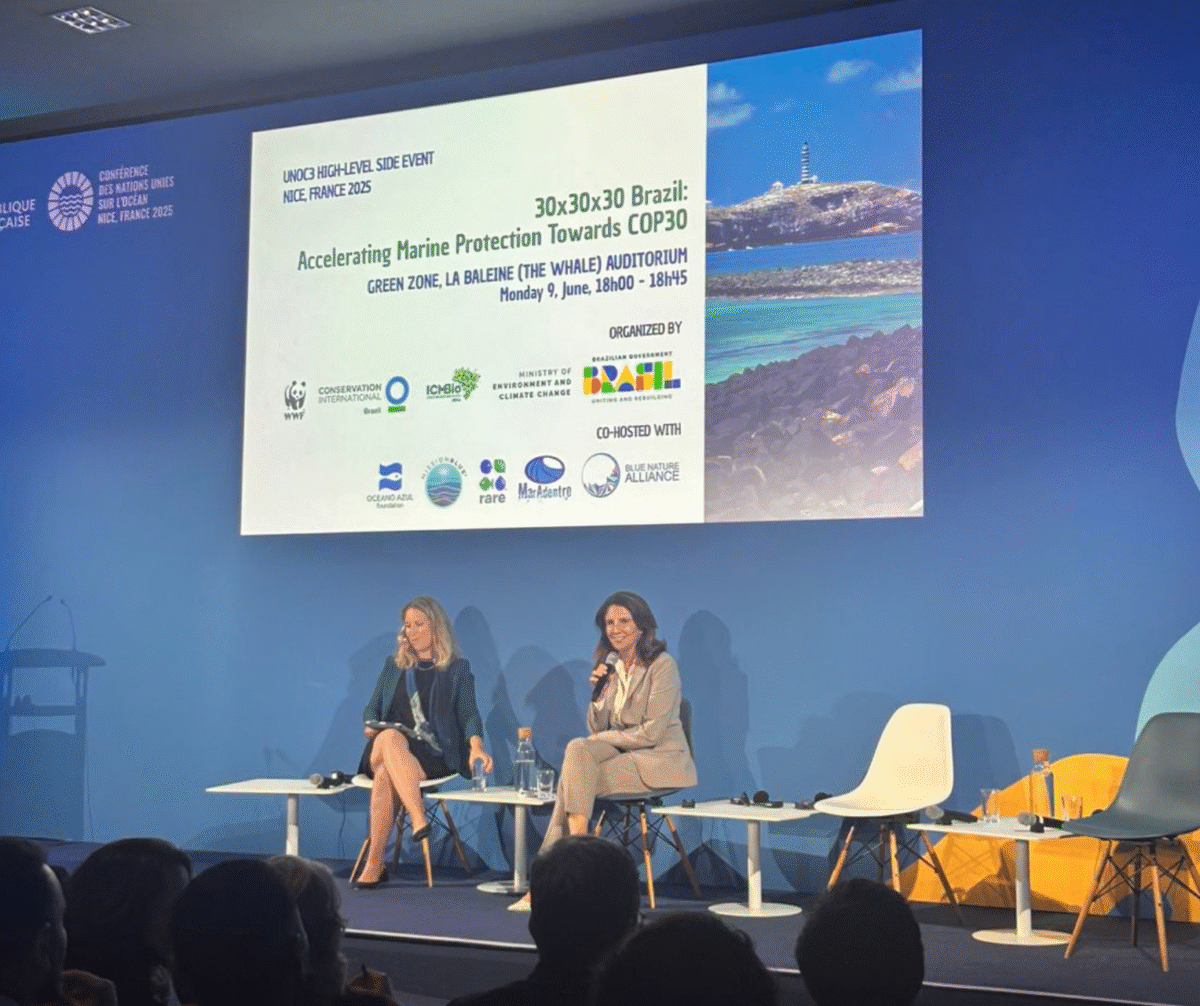
At UNOC3, Brazil took the global stage with high-level representatives, including President Lula, Minister Marina Silva, and COP30 CEO Ana Toni, making bold announcements:
What Does Belém Have to Do with It?
At the UNFCCC June Climate Meetings in Bonn, Brazil unveiled its COP30 Action Agenda, structured around six thematic pillars. And for the first time, the ocean has earned its place among them. This marks a significant step forward, with Brazil aiming to create a true “climate task force” that brings together governments, civil society, and the private sector in a coordinated response to the climate crisis. But this ambition raises the critical question: how do we ensure that civil society — especially traditional and coastal communities — has a real voice and influence in shaping these global decisions?
Ocean Voices from Brazil
Brazilian organizations were highly active at UNOC3, with groups like CONFREM, Fundação Boticário, Instituto Linha D’Água, PainelMar, Voz dos Oceanos, WWF Brasil, Greenpeace Brasil, Instituto Mar Adentro, and many others leading impactful side events.
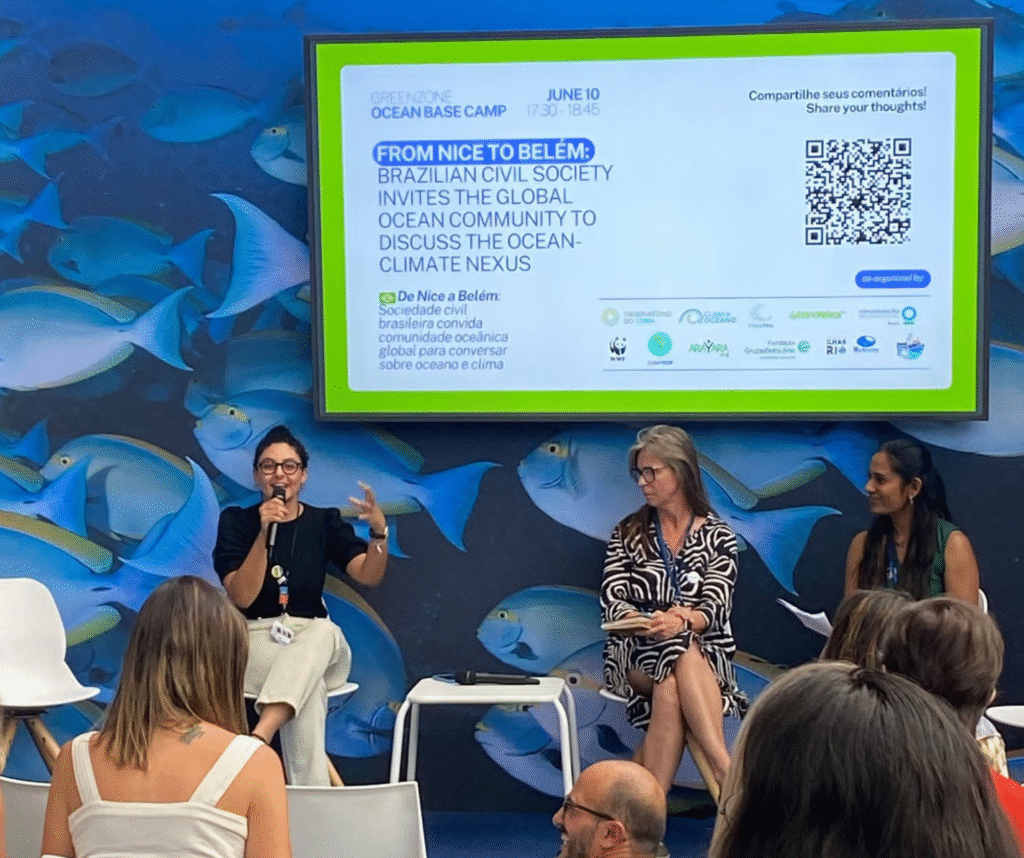
One standout event, “From Nice to Belém” called for urgent global dialogue on ocean and climate — grounded in listening to and respecting traditional communities. It stressed the need to bring community-based climate adaptation strategies, such as those developed by artisanal fishing groups into the heart of COP30 discussions.
Another key session focused on small-scale artisanal fisheries, advocating for a governance model rooted in human rights, food security, and community participation and leadership.
Youth voices were also front and center. The session “Oil, Plastics, and the Future of the Ocean” highlighted the critical role of young people in shaping ocean-climate policy. It led to the launch of Brazil’s National Youth Coalition for Ocean Justice, a new platform aiming to ensure meaningful, equitable youth participation at COP30 and beyond.
Will Civil Society Really Be Heard at COP30?
Despite encouraging signals, major barriers remain. The UNFCCC process is complex and dominated by formal diplomacy, making most COP spaces difficult to access for grassroots groups, especially for communities, traditional peoples, and marginalized youth. Still, there are signs of hope:

Navigating the Road to Belém
To ensure meaningful participation, we must take deliberate steps to make the road truly inclusive
These communities are not just vulnerable, they are essential actors in climate and ocean solutions.
COP30 Can Be a Turning Point
Brazil has shown it can lead inclusive, people-centered dialogue, as seen during the G20 Social Forum in Rio in 2024. At UNOC3, open consultations led by the Ocean & Climate Platform, Varda Group and RISE UP demonstrated the power of bringing civil society into global processes.
Now, with COP30 on the horizon, we have a unique opportunity to put the ocean, and the communities who depend on it, at the heart of climate action.
Because without a healthy ocean, there is no stable climate. And without social justice, there is no just transition.