
“No people on earth are more suited to be guardians of the world’s largest ocean than those whom it has been home for generations” Epeli Hau’ofa, Our Sea of Islands, 1994
Guest blog by Eparama Qerewaqa – the Executive Coordinator for the Alliance for Future Generations (AFG), A Fiji based organisation working with young people in building a just and sustainable future for all. Eparama’a expertise lies in the intersections of Climate Science, Climate Justice and Youth Development. For this article he is writing as a co-convener of the RCOY Oceania and technical working group for the text of the Pacific Youth Climate Statement.
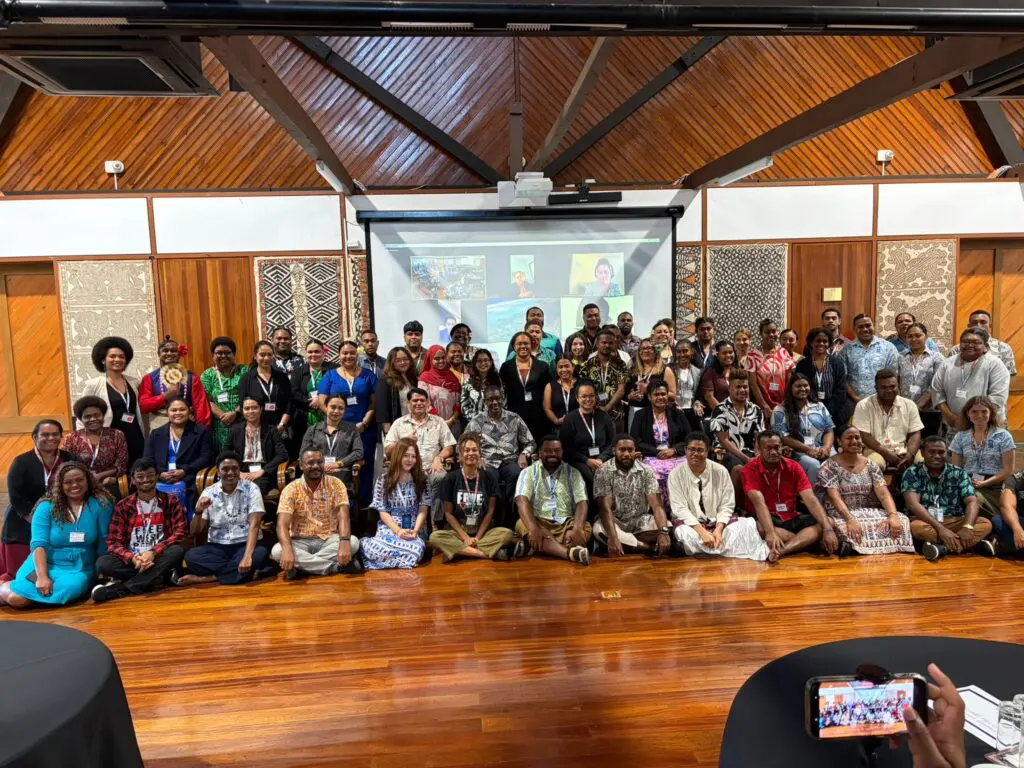
Earlier in August, we convened over 100 young people, in person and online, for the Regional Conference of Youth (RCOY) Oceania, the regional gathering endorsed by YOUNGO, the official children and youth constituency of the UNFCCC. Participants came from Melanesia, Micronesia, Polynesia and the Pacific Diaspora. Recognising that some Pacific islands still live under occupation, and that the question of liberation remains alive, we were adamant about including every island’s voice where possible, regardless of political status.
The logistics were not easy: the Pacific is vast, with island states spread across more than one third of the planet. Yet we persisted. The convening was led by the Pacific Youth Council, with the Pacific Island Students Fighting Climate Change, the Alliance for Future Generations and 350 Pacific as co-convenors, and supported by the Pacific Islands Forum Secretariat, the UN Interagency Working Group on Adolescent and Youth, Fiji’s Ministry of Environment and Climate Change, and other local and regional organisations.
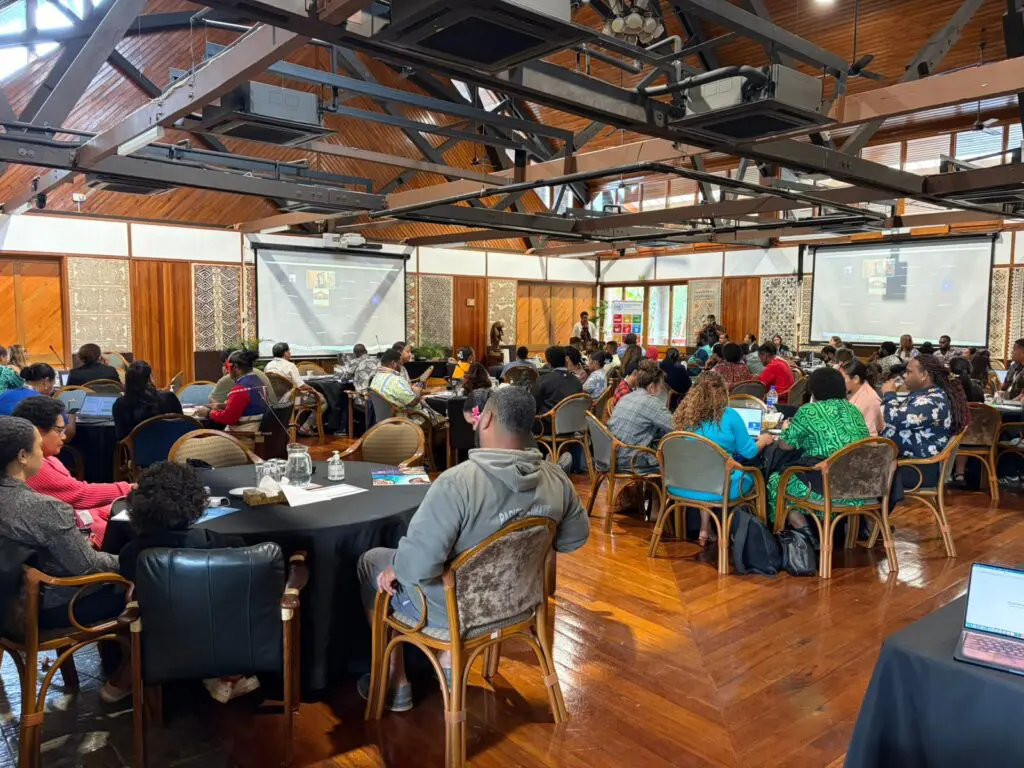
The outcome is the Pacific Youth Climate Statement, finalised at RCOY Oceania in Suva, built on the foundations laid by two hybrid dialogues held in May and June. Nothing in it arrived from outside these rooms, and nothing was adopted into the final text that was not first debated on the floor.
This is a comprehensive articulation of our aspirations, demands and priorities. The Pacific accounts for less than 1% of global emissions, yet we already face the impacts of a changing climate. That injustice is not lost on us, nor is the fact that this is the system we have inherited. This collective effort holds the hope we wish to see from the UNFCCC process, spanning more than nine pillars and thematic areas. The world need not look far for answers.
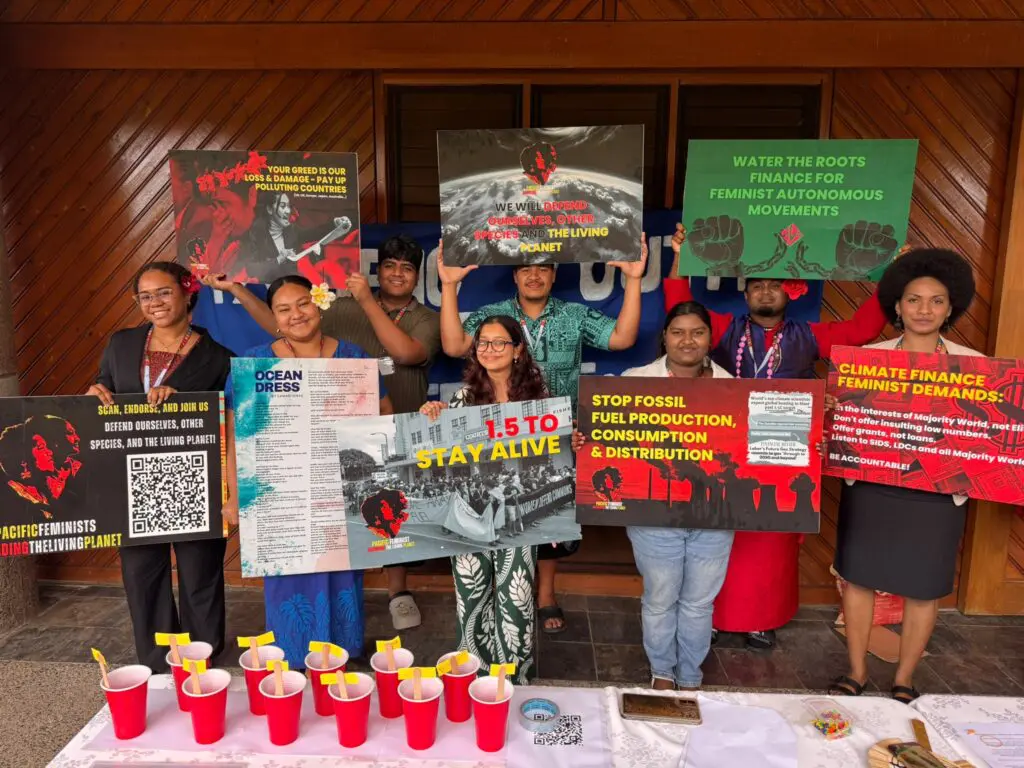
“Our red lines are clear. 1.5°C is a survival threshold for our islands, and overshooting it as a pathway is not acceptable. We reject false solutions, deep-sea mining and the monetisation of non-economic loss and damage. The loss of our loved ones, our lands, languages, culture, totemic species and our ecological relationships with our flora and fauna, land and ocean, shaped by traditions fine-tuned over millennia, cannot and will not be priced. We demand an end to the use of our Blue Continent as a sacrifice zone for radioactive waste discharges, weapons testing and military exercises. We affirm a non-negotiable: Nothing About Us, Without Us.
The ambitions and demands in this statement extend beyond the COP negotiations. For us, the Ocean-Climate Nexus is fundamental to our survival. The ocean absorbs our excess carbon, yet is repaid with warming, acidification and destruction, while global climate negotiations have sidelined it for three decades. We call for an immediate, just and equitable phase-out of fossil fuels and affirm that climate finance is an obligation owed, not aid granted at discretion. At the heart of this statement are real human lives, disproportionately affected by the climate crisis in the Pacific, and more so still for our women and girls and marginalised communities.
Our demands also build on the work of Pacific students who took the fight for climate justice to the International Court of Justice. With the Court’s 2025 advisory opinion clarifying states’ legal obligations on climate change, accountability is not only a moral imperative but a matter of international law.
This statement now exists at an opportune time. Australia, our next-door neighbour, holds the presidency of negotiations at COP31, yet continues to extract and export coal, oil and gas. Meanwhile, the UN Environment Programme’s latest report warns that urgent and stringent cuts to greenhouse gas emissions are needed to minimise the scale and duration of global warming beyond 1.5°C and return temperatures to that threshold by the end of the century. The IPCC’s Seventh Assessment Report is also on the horizon, making this a critical moment for governments to act on the science rather than negotiate around it.
As the world once again convenes to discuss our future in a changing climate, the inaction and lack of political will from parties to the Climate Convention comes under the spotlight. We are saying enough. Parties must realise that this is a fight for the survival of everyone, not just the Pacific. While multilateral systems remain painfully slow, we in the Pacific continue to hold the line.
You can access the statement here: Pacific Youth Climate Statement
This is a guest blog and may not necessarily represent the views of other RISE UP network members or RISE UP as a whole. It is only through open dialogue and a diversity of ideas that we will arrive at the solutions necessary to restore Ocean health.