RISE UP for the Ocean logo in white

Small-Scale Fisheries

Scroll

Small-scale fishers feed the world — and deserve a seat at the table

Small-scale fisheries sustain livelihoods, food security and local economies across many regions. Yet small-scale fishers are often excluded from decision-making processes shaping fisheries governance, ocean management and coastal development.
RISE UP’s strategic intent is to secure tenure rights and equitable access to resources for small-scale fishers, and to position them as central actors in ocean governance and sustainable fisheries management, in line with the Voluntary Guidelines for Securing Sustainable Small-Scale Fisheries (VG-SSF) at national, regional and global levels.
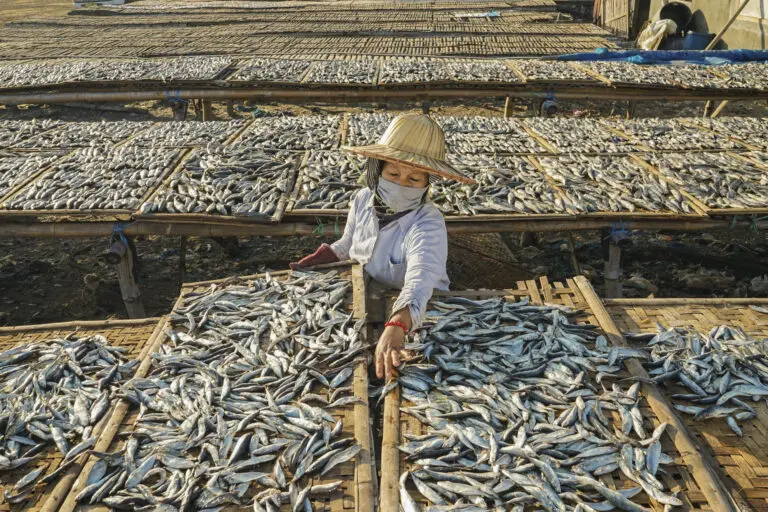
A worker in a conical hat lays out small fish to dry on bamboo racks
600M
people worldwide depend on small-scale fisheries for their livelihoods and food security
Why It Matters

Communities at the front line deserve to set the terms

Without coordinated engagement, decisions risk reinforcing inequities, including industrial access to fisheries, exclusion of small-scale fishers from spatial planning and weak protections for coastal communities.

Governments are more likely to adopt policies that protect small-scale fisheries when they encounter organized fisher representation and clear community priorities, evidence of social, economic, and food security benefits, policy proposals aligned with national priorities and regional frameworks and visible cross-regional support for equitable fisheries governance.
What We're Doing

Connecting community voices to global policy

RISE UP strengthens coordination, knowledge sharing and advocacy across SSF networks by:
  • Facilitating regional collaboration among small-scale fisheries organizations and allied civil society groups.
  • Supporting members in advocating for implementation of preferential access areas and tenure rights through NPOAs guided by the VG-SSF.
  • Coordinating engagement around the implementation of the WTO Agreement on Fisheries Subsidies, including elevating fisher perspectives to strengthen government positions in target countries.
  • Connecting community organizations to global and regional policy spaces.
  • Supporting fisher and community voices in advocacy to reinforce national and regional policy influence.
  • Convening dialogue between coastal communities and policymakers on emerging ocean uses, including offshore wind developments.

RISE UP in action

RISE UP IN ACTION

Centering Coastal Communities in the Offshore Energy Transition

Colombia · The Philippines · South Africa · Namibia
As offshore wind expands, decisions about where and how projects are developed can have significant implications for small-scale fishers and coastal communities that depend on marine spaces for their livelihoods, food security, and cultural identity.

Through Centering Coastal Communities in the Offshore Energy Transition, RISE UP is working with small-scale fisheries and community-led organizations across Colombia, the Philippines, South Africa and Namibia to better understand how offshore wind development intersects with community well-being, marine ecosystems and sustainable livelihoods.

The initiative will document community experiences, priorities, and proposals through interviews and dialogues; identify knowledge and governance gaps; and create opportunities for exchange around marine spatial planning, offshore wind and a just energy transition.

RISE UP and partners will also develop educational resources and regional and global briefings to help connect community perspectives with wider policy discussions on offshore energy and ocean-climate action.
RISE UP IN ACTION

Advancing preferential access for small-scale fisheries

April–May 2026 · Hua Hin, Thailand
At the TBTI World Small-Scale Fisheries Congress 2026, RISE UP brought together small-scale fisheries representatives, civil society and researchers for a workshop focused on Preferential Access Areas (PAAs) and their role in supporting more equitable and sustainable ocean governance.

PAAs are designated coastal areas that give small-scale and artisanal fishers preferential access to fishing grounds, often by limiting or excluding industrial fishing. As competition for ocean space increases, from industrial fishing, offshore energy, aquaculture, tourism and shipping, these areas can play an important role in securing access to fishing grounds, supporting livelihoods and local food systems, and reducing competition with larger-scale fleets.

RISE UP’s workshop brought together more than 40 participants to explore how PAAs can support both conservation and small-scale fisheries. Discussions connected experiences from fishing communities with wider policy debates on fisheries governance, trade, just transition and equitable access to ocean resources.
The session also created space for small-scale fisheries representatives supported by RISE UP to participate directly, share their experiences, and engage with researchers and civil society working on similar challenges across different regions.
The discussion situated PAAs within broader international commitments, including the FAO Small-Scale Fisheries Guidelines, SDG 14.b, and ongoing WTO discussions on fisheries subsidies and access.

At its core, the conversation explored a broader question: how can ocean governance protect ecosystems while securing the rights, access and livelihoods of the small-scale fishers who depend on them?
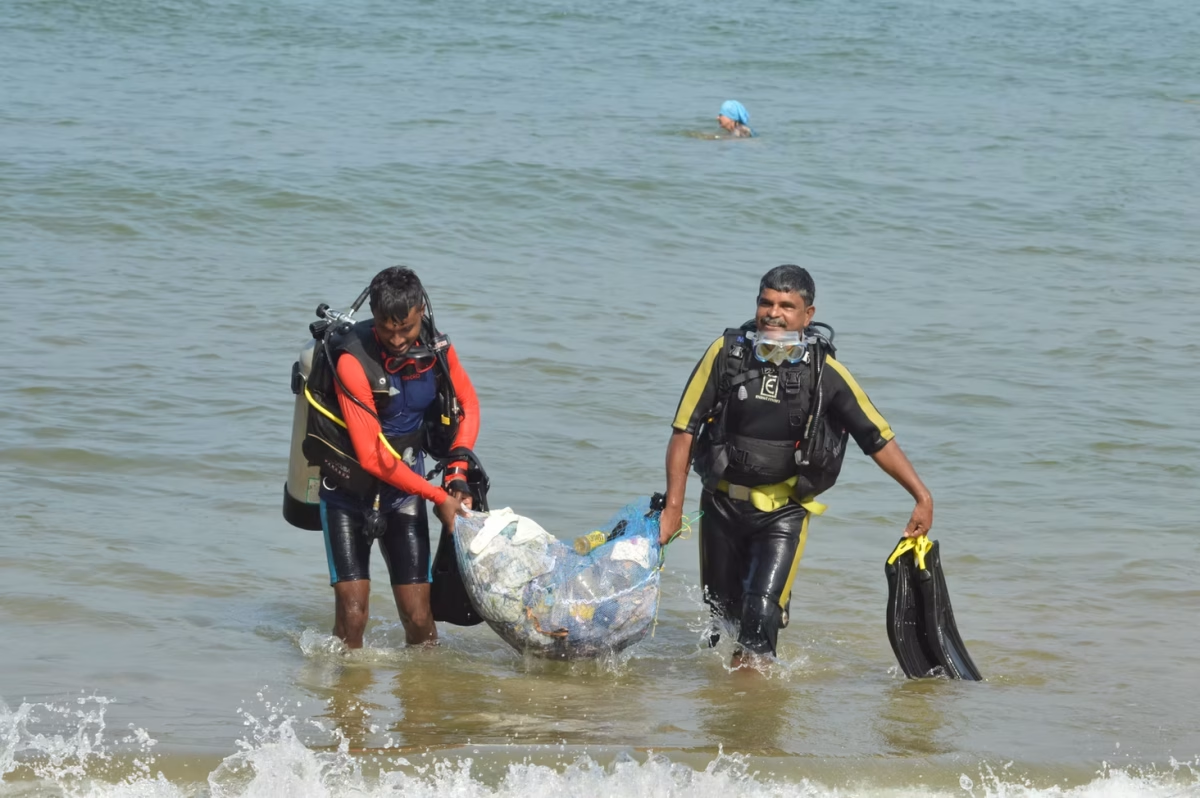
RISE UP IN ACTION

Bringing small-scale fishers into fisheries subsidy reform

May 2026 · Jakarta, Indonesia
Fisheries subsidy reform has major implications for ocean health and for the millions of people who depend on small-scale fisheries for their livelihoods. As governments advance implementation of the WTO Agreement on Fisheries Subsidies, the perspectives and experience of small-scale fishers are critical to shaping reforms that address overfishing while reflecting the realities of coastal communities.

In May 2026, RISE UP joined the Stop Funding Overfishing Coalition, INDEF (Institute for Development of Economics and Finance), and the International Institute for Sustainable Development to bring together 30 small-scale fishers, government representatives, researchers and civil society actors in Jakarta, Indonesia.

The workshop explored what fisheries subsidy reform means in practice for small-scale fisheries and how reforms can work for both people and the ocean. Participants discussed how harmful, capacity-enhancing subsidies could be redirected toward positive incentives, including vessel buybacks, gear exchanges and support for sustainable fishing practices.

A central message emerged from the discussions: small-scale fishers are partners in designing solutions, not simply a sector to be regulated.

The exchange supported dialogue among fishers, policymakers, researchers and civil society and created a foundation for continued engagement as WTO members move forward with fisheries subsidy reform.
Read RISE UP member Hollie Booth’s reflections on the workshop and the role of positive incentives in the WTO “Fish 2” negotiations.

Explore our focus areas

A school of sicklefin devil rays swimming in the open ocean

Advancing the BBNJ Agreement

Securing fair and inclusive implementation of the BBNJ Agreement to shape the future of high seas governance.

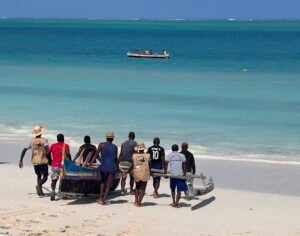
A group of people carrying a wooden outrigger fishing canoe up a white sand beach, with another small boat out on the turquoise water behind them.

Supporting Sustainable Small-Scale Fisheries

Advancing secure and equitable rights for small-scale fishers to access marine resources and participate in ocean governance.

A jellyfish with a brown and white striped bell drifting in dark deep-sea water flecked with marine snow.

Reinforcing Opposition to Deep-Sea Mining

Building global support for a moratorium on deep-sea mining before regulatory frameworks are established.

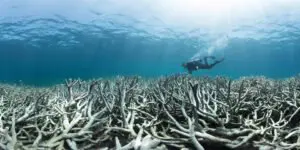
A scuba diver swimming above an expanse of bleached white staghorn coral.

Championing Ocean-Based Climate Action

Advancing equitable and effective ocean-climate action with ocean-dependent communities as essential actors in climate governance and decision-making.

Latest stories

See all stories →

Join the organizations shaping ocean policy

Network membership is open to civil society organizations, community groups, foundations, and research institutions. Members gain access to advocacy resources, policy platforms, collective campaigns, and a global community of ocean justice advocates.
RISE UP for the Ocean logo in white

Uniting people, knowledge and partnerships to create a more equitable ocean.

© 2026. All rights reserved.
Proudly crafted by Conservation.Digital
Secret Link