
2025 may go down as the year the ocean finally moved from the margins of global politics to the center of international decision-making. Across diplomatic halls, courtrooms and climate negotiations, the ocean emerged not as a niche environmental concern, but as a pillar of climate stability, food security and geopolitical strategy. The World talked about the ocean differently this year.
Whether the momentum generated in global forums will deliver real change for coastal communities remains unclear, and whether governments will follow through with concrete action is an even bigger uncertainty. Despite the growing momentum in political attention, ocean conditions continued to worsen. Heatwaves, sea-level rise, acidification and biodiversity loss accelerated across many regions, compounded by overfishing and pollution. At the same time, the gap between high-level commitments and on-the-water implementation became impossible to ignore, raising serious doubts about whether governments are ready to act at the scale the crisis requires.
The ratification of the BBNJ (High Seas) Treaty marked one of 2025’s significant milestones. With the 60th ratification in September, the treaty is now set to enter into force in January 2026, finally making a legally binding agreement to protect biodiversity in areas beyond national jurisdiction. Yet implementation remains the true test, funding, monitoring and enforcement capabilities are needed to turn its promise into protection.
Equally important are capacity building and meaningful community participation, which must serve as core pillars to ensure the treaty is implemented in a just and equitable way. To make this possible, the institutional mechanisms that support these pillars must be clearly defined, adequately funded, and grounded in transparent, participatory governance.
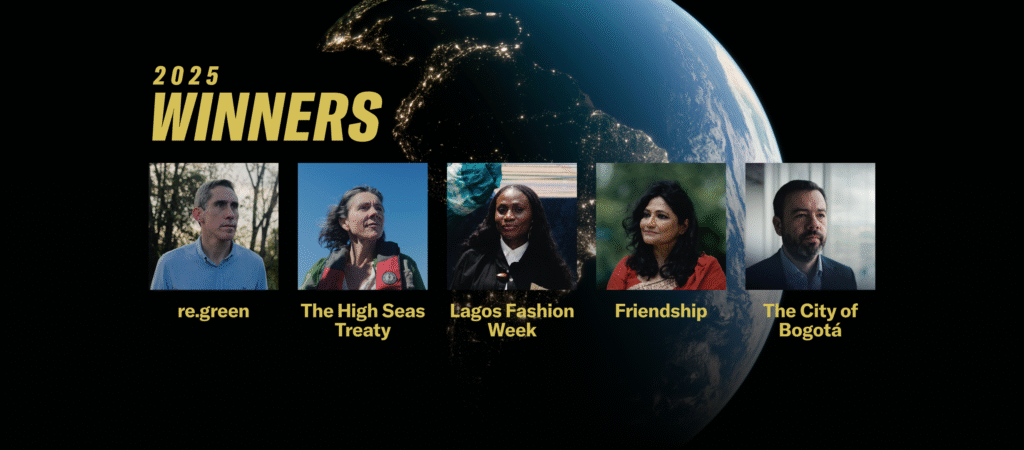
The treaty’s recognition through the 2025 Earthshot Prize to Revive Our Oceans, brought much needed global visibility, reinforcing its critical role in safeguarding our planet’s health and underscoring the urgency of advancing its implementation.
In June, the UN Ocean Conference saw more than 60 heads of state in attendance, a record that shows how much political weight ocean issues have gained. Leaders spoke with urgency.
The oceans are not for sale. – Emmanuel Macron declared.
Yet these statements often outpace domestic policies, especially among major fishing nations whose industrial fleets continue to exert pressure on already stressed ecosystems.
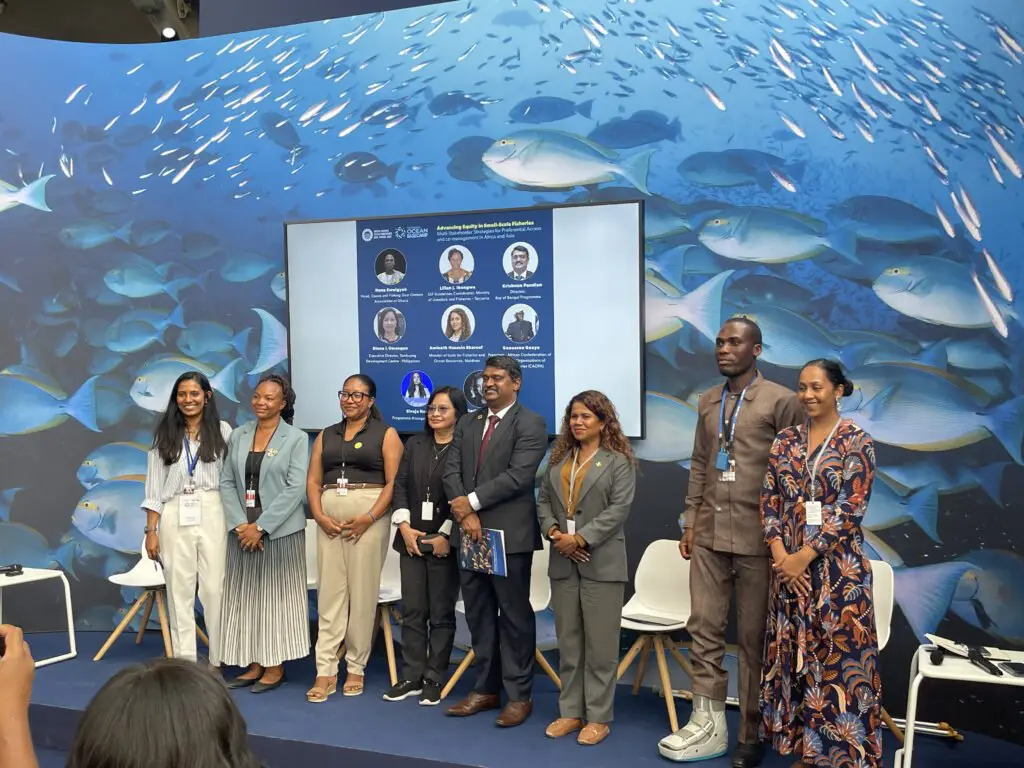
Also at the conference, small-scale fisheries celebrated meaningful wins. Ghana made a significant step to double its preferential access area for SSF from 6 to 12 nautical miles with co-management; excluding industrial vessels entirely, a major win for community-led ocean governance. In a promising development, Senegal’s Director of Maritime Fisheries, also announced the government’s intention to extend the zone reserved for small-scale fishers from 6 to 12 nautical miles and the Maldives pledged to implement a national plan of Action for SSF. Fishers repeatedly asserted their role as equal partners in ocean governance, reminding leaders that 30×30 cannot succeed without their rights and knowledge. Still, these gains remain unfulfilled, without broader adoption and support across countries, these advances risk remaining isolated victories rather than building a durable, global framework for community-led ocean governance.
Momentum also grew around the WTO Agreement on Fisheries Subsidies , which officially entered into force in September, another win for sustainability and the first of its kind coming from the WTO. This multilateral agreement prohibits government subsidies that contribute to illegal, unreported and unregulated (IUU) fishing, it also targets subsidies for overfished stocks unless they can demonstrate that effective management measures are in place.
Global discussions converged around precaution and justice. Forty countries backing a moratorium or precautionary pause on deep-sea mining added weight to scientific calls for restraint. This support strengthened scientific calls for restraint, but it is still far from halting International Seabed Authority (ISA) processes or stopping mining companies and supportive states from advancing exploitation plans.
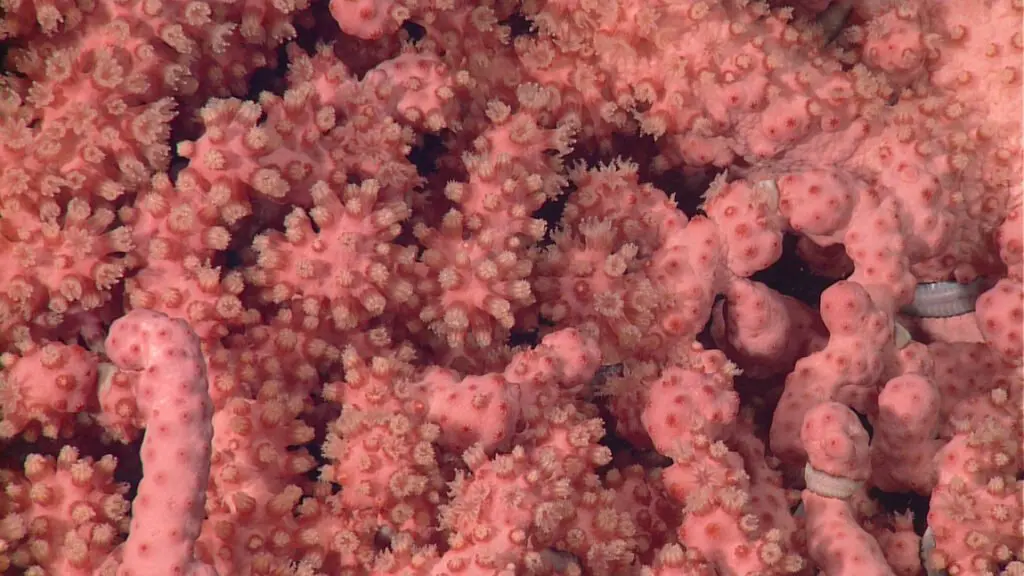
At the IUCN World Conservation Congress, Motions 032 and 035, aimed at protecting seamounts, vulnerable marine ecosystems, and mesopelagic zones, were approved. They signal growing recognition of the importance of deep-sea ecosystems. Still, as non-binding motions, they rely on sustained political pressure to translate into real protections. This momentum builds toward a stronger push for a global moratorium on deep-sea mining, but the fight is far from over.
The deep sea cannot become the Wild West. Secretary-General António Guterres emphasized at UNOC3.
By COP30, the ocean had secured a central place in global climate discussions. Leaders highlighted the inseparable relationship between forests and ocean, underscored by Brazil’s framing of COP 30 as the “COP of forests and implementation”.
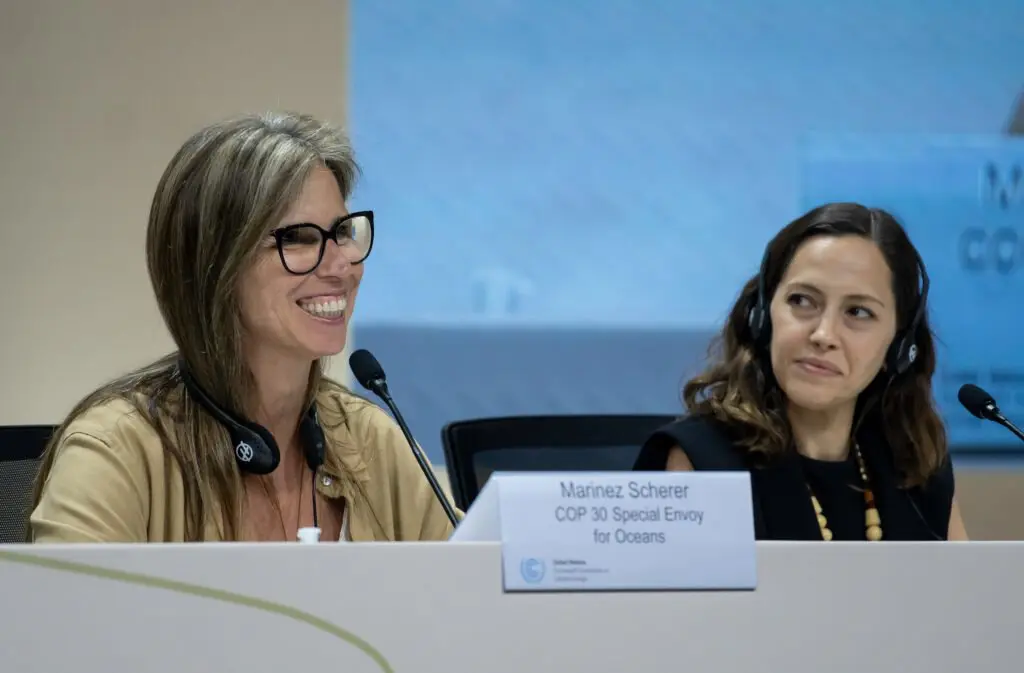
COP30 Special Envoy for the Ocean, Marinez Scherer urged nations to treat forests and oceans as “one living system” and framing their protection as essential for humanity:
The truth is simple, but still deeply overlooked: science is clear we cannot solve the climate crisis unless we act together with — and for — the Ocean. – Marinez Scherer
Yet the reality is that emission cuts remain insufficient and ocean warming continues to intensify. Whether this framing will translate into binding commitments and financing remains unclear.
COP30 also advanced ocean-focused initiatives such as the Blue NDC Challenge, and Wave Forward: The Blue Thread. These signaled a coordinated effort by the ocean community to accelerate ocean-based climate solutions, anchored in the Blue Package and Ocean Breakthroughs. Meanwhile, fisher organizations from around the world joined forces at COP30 to center these voices. Their message was simple: ocean action must scale up and small-scale fisheries must shape that action. Together, they called for secure marine tenure and recognition of traditional knowledge, sustainable and community-led technologies, direct funding with gender and territorial equity, a just energy transition and strengthened leadership of Indigenous and coastal women.
A new political narrative emerged this year: a stable climate is impossible without a resilient ocean. Development banks and climate finance mechanisms began integrating ocean considerations, even though SDG 14, Life Below Water, remains the lowest-funded Sustainable Development Goal. The scale of the funding gap remains vast, and harmful subsidies still overshadow positive investments.
At the same time, the ocean itself sent repeated warnings. Marine heatwaves intensified across Pacific, Indian and Atlantic basins, pushing coral reefs past critical tipping points. Ocean acidification accelerated, weakening the ocean’s ability to buffer climate impacts, while coastal communities faced overlapping ecological and economic shocks. Momentum only matters if it translates into real action, fast enough to keep pace with the climate impacts and rapid changes occurring in the ocean.
The months ahead will show whether governments can deliver on the commitments made under the global spotlight. The Ocean now has political attention, emerging legal clarity and strong scientific consensus. Whether 2025 becomes a true turning point or just another high-profile moment, will depend on whether leaders turn promises into action at the scale the ocean crisis demands.