
Every September, New York City becomes the centre of the climate conversation. Climate Week NYC, held alongside the UN General Assembly, is now the world’s largest climate event: 2025 was its biggest year yet, with more than 100,000 participants and over 1,000 events. What makes it unique is who shares this space: heads of state, CEOs, investors and frontline communities, all in one city in one week. But numbers rarely move people. Stories do.
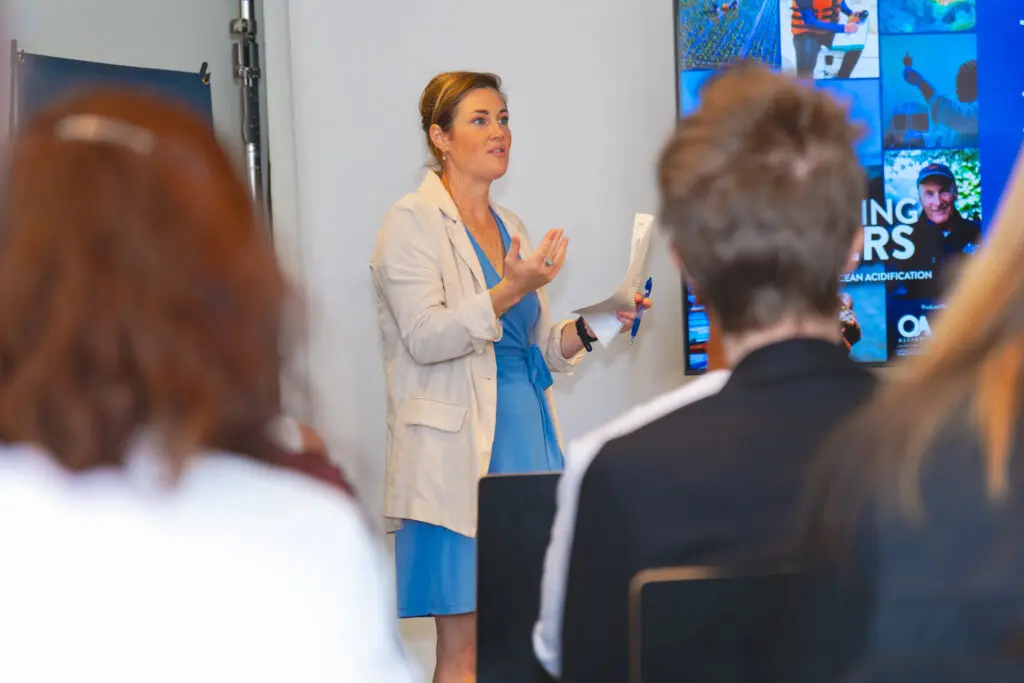
On 22 September, RISE UP for the Ocean and the International Alliance to Combat Ocean Acidification (OA Alliance) brought together professional storytellers, communications experts, community voices and civil society to ask: what does a just and healthy ocean-climate future look like and who is helping to shape it?
We opened with the OA Alliance film Changing Waters: Time for Action on Ocean Acidification, made with LUMA Storytelling and filmed in Washington State, Colombia and Fiji. It follows people from government, Indigenous communities, the seafood industry and science who are responding to ocean acidification. It is not a story of doom, but of all we can still save through ambitious climate action. Jessie Turner and Mariama Fofana of the OA Alliance explained how the Alliance bridges frontline work and government action. The film’s screening kit is free for anyone to use.
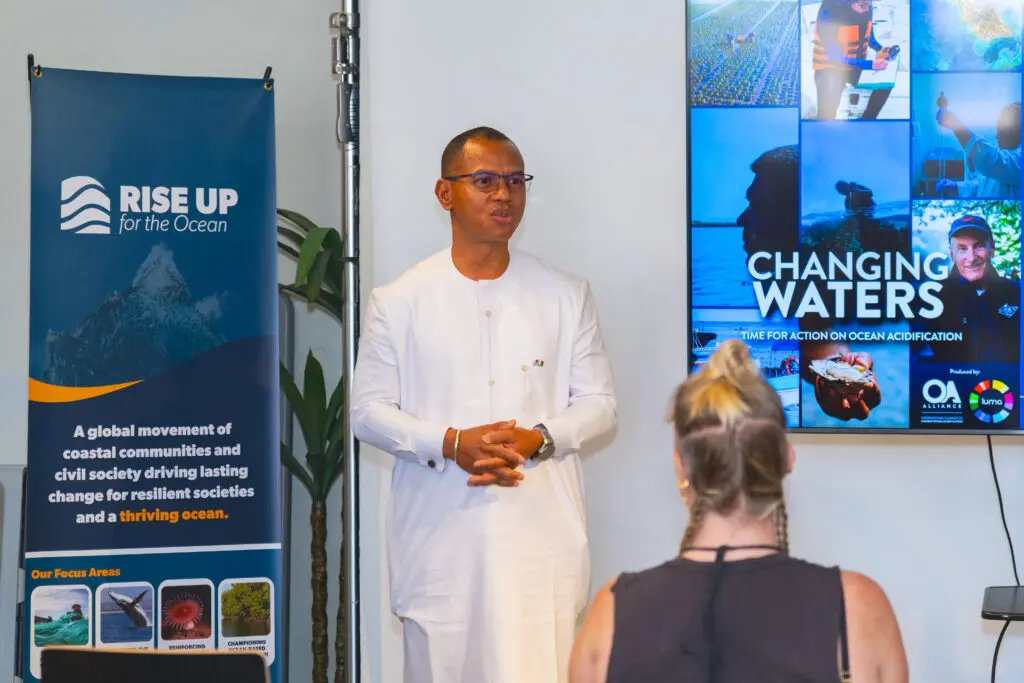
Dr. Paubert Tsimanaoraty Mahatante, Madagascar’s former Minister of Fisheries and the Blue Economy, reminded us that most ocean acidification data comes from the global North, with almost none from Africa, and that communities must be informed in ways that respect local beliefs.
Natalie Fox and Khadija Stewart of RISE UP then introduced the ocean and climate cluster and launched the second issue of its digital magazine, Frontlines of the Blue Future: a digital platform highlighting community-led, nature-positive solutions for climate resilience. Issue 2 is an interactive showcase of grassroots restoration projects and features the RISE UP COP30 Fellows who are driving local environmental action across Latin America, Africa, and the Caribbean. Read Issue 2 here.
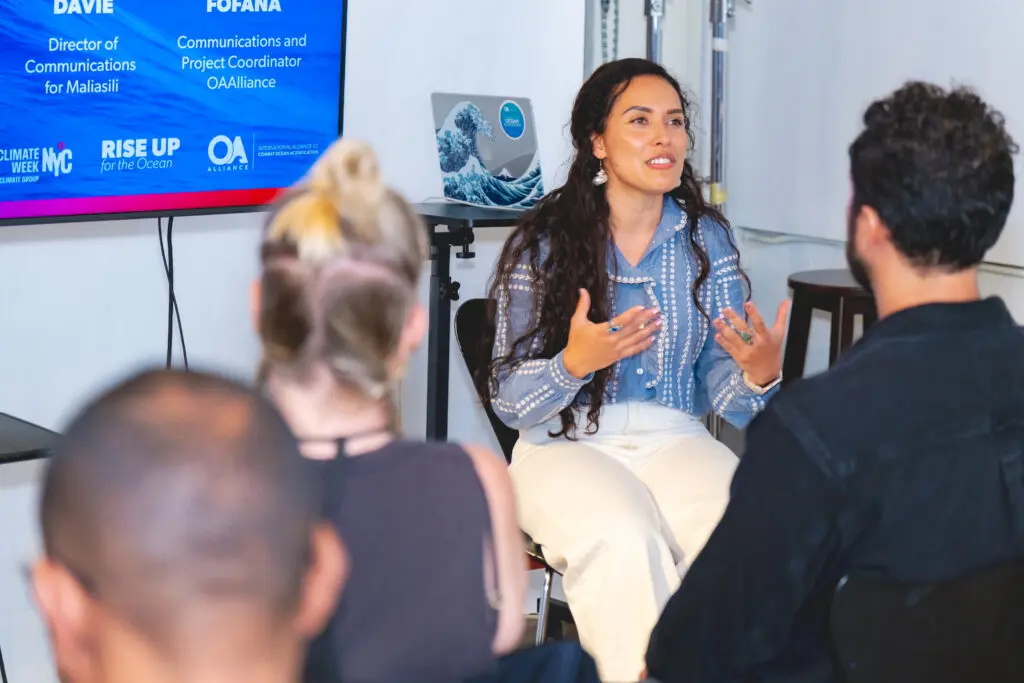
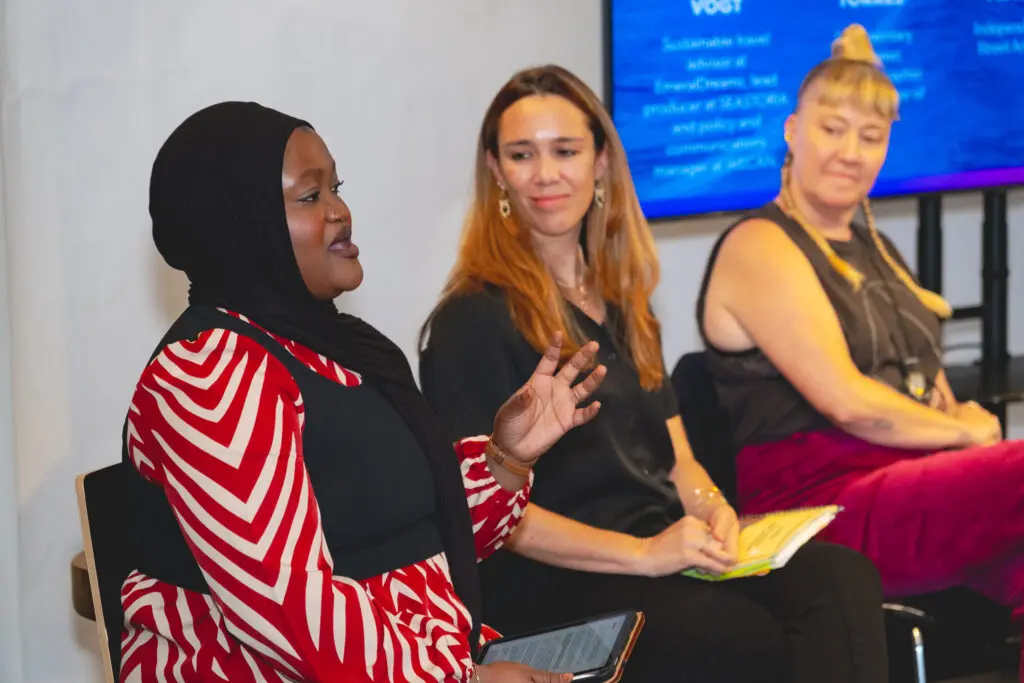
Then the panel of storytelling experts compared how different crafts approach the same challenge, and why method, ethics, perspective, emotional connection and technique all help shape the narrative behind how climate change is affecting humanity.
Cultural storytelling: Ivory Vogt (Seastoria)
Ivory’s film is written from Palau’s own culture, telling the islands’ creation legend with local filmmakers and divers. It leads with myth and place, then brings in the science, conservation and policy.
Documentary: Brian Torres Camargo (Buho Video Production)
Brian came to filmmaking from advertising, not science, out of a wish to protect his children’s future. He began by interviewing 34 children and kept documenting young people’s own views, putting their voices at the centre.
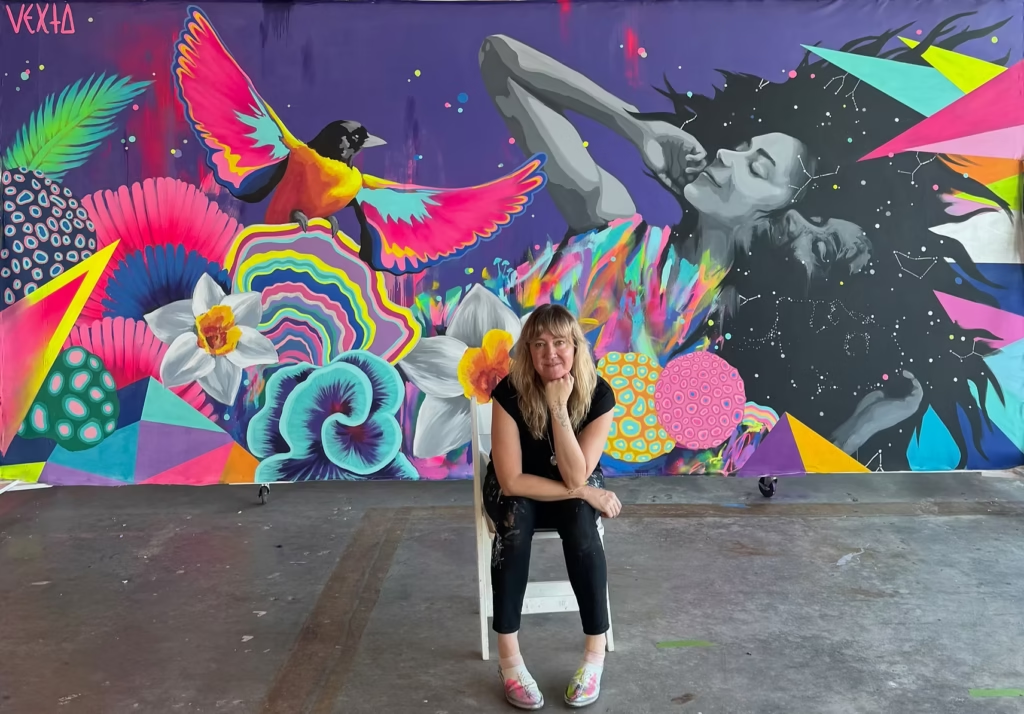
Street art: Yvette Vexta
Art changes how people think, says Yvette: a different route home, new ideas and playfulness all help us get out of our own way. Her work puts the invisible on a wall where people pass every day.
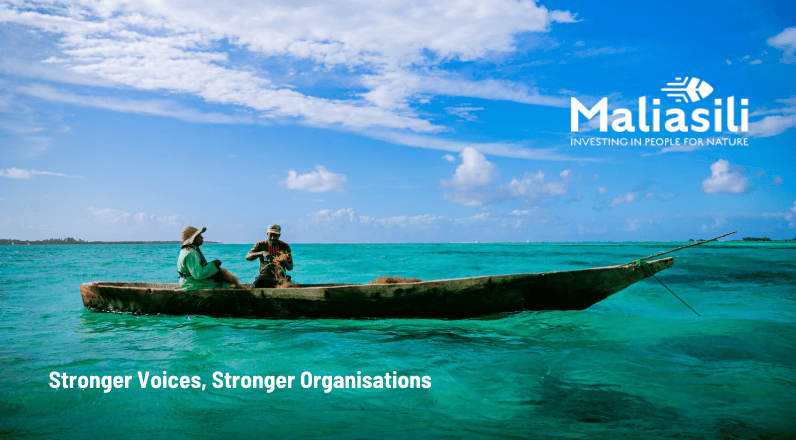
Communications: Jessie Davie (Maliasili)
On ethics, Jessie was clear: partners’ stories are their stories, and Maliasili does not tell them as its own. Around twenty conservation leaders agreed shared messages for a major ocean conference in Kenya, calling for local voices to be heard.
Journalism: Mariama Fofana (OA Alliance)
A technical issue like ocean acidification needs human stories to be understood. Changing Waters pairs science with people from several regions and was built collaboratively, including by representing Indigenous voices. The craft is translation.
The panelists agreed that storytelling is not decoration on top of the real work. It is the work. And these crafts are not silos: art, journalism, film and policy papers reach different audiences at the UNFCCC and in national plans, but their goals are complementary.
Three takeaways stayed with us. Storytelling for action must reflect lived experiences happening now: it isn’t fiction, it’s documenting lived realities. We are all creative, so let’s use unique, human-generated formats to reach beyond the NGO and scientific world. And communications must help governments grasp the impact, urgency and nuance of the ocean-climate crisis, which takes a clear hook, and a clear hook takes strategy, work and refinement.
“One of the things I’ve been thinking about since Climate Week NYC is just how much the way we tell a story can shape what people see, feel, and ultimately care about.
What struck me most was the idea that storytelling can be so much more than a way to raise awareness. A story rooted in lived experience can bring an issue to life in a way that data alone sometimes cannot. It can connect science to the realities people are experiencing, bring local perspectives into global conversations, and create space for communities to help shape the solutions being discussed.
That feels especially important for ocean climate issues, where so many of the changes happening beneath the surface can be difficult to see or understand. Art, film and storytelling can help make those unseen changes visible and felt.”
Mariama suggests three guiding questions to keep asking every time we write:
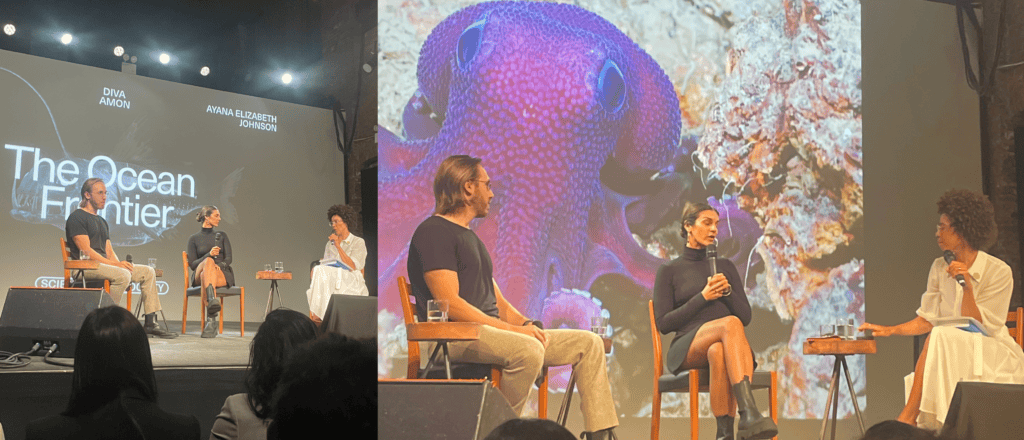
Whilst in New York, RISE UP also visited Science & Society: The Ocean Frontier at Pioneer Works in Brooklyn, hosted by Dr. Ayana Elizabeth Johnson. The event was a simple discussion between experts, asking who owns, profits from and governs the ocean as clean energy and tech head offshore – but with a future facing focus, because if we don’t have these conversations now it will be hard for us to keep up as things accelerate. The star for us was Dr. Diva Amon, the Trinidad-based deep-sea biologist and co-founder of SpeSeas. If Sylvia Earle is Her Deepness, Diva Amon must be First Lady of the Depths.
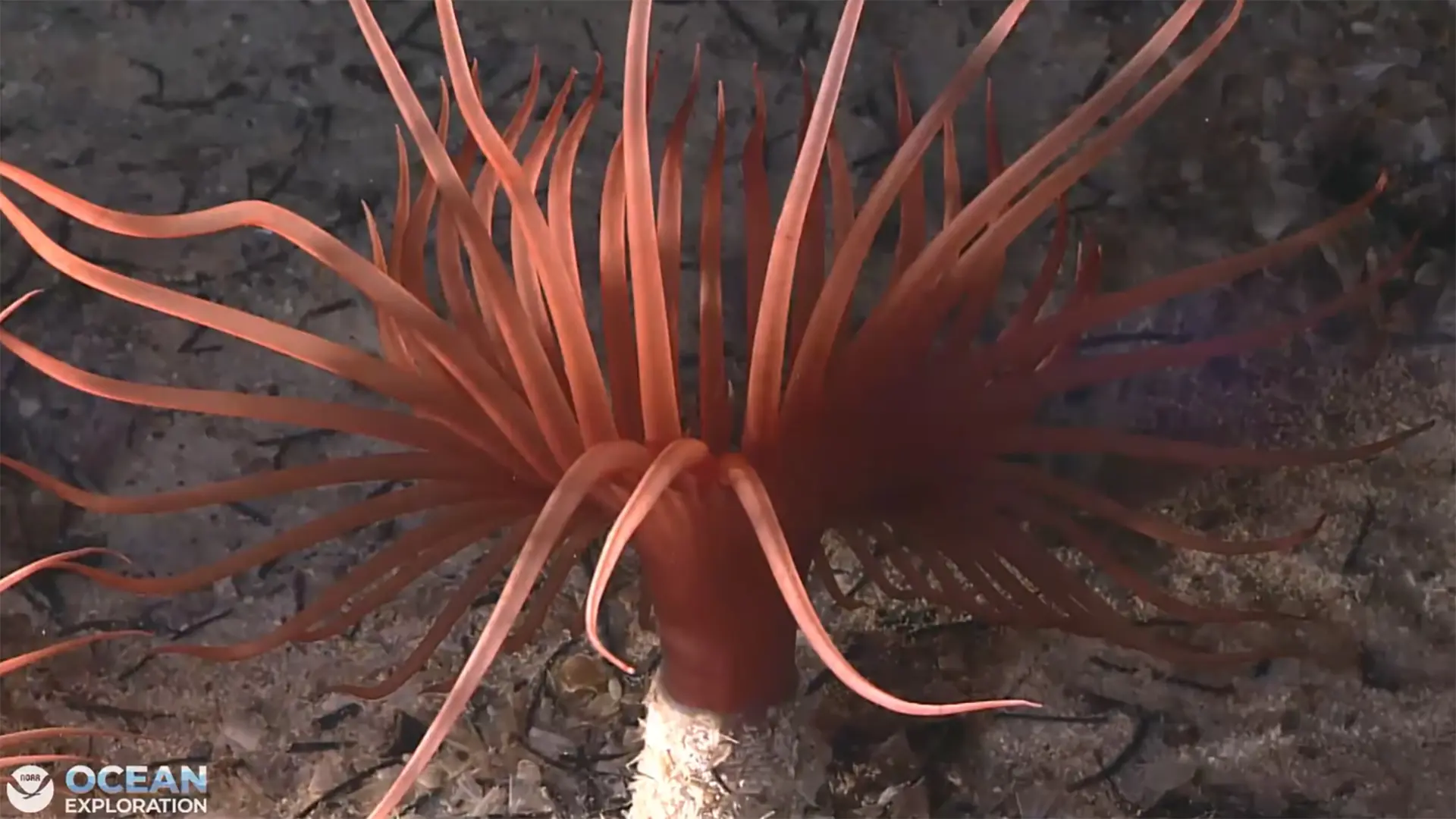
Diva’s work was not new to us. Back in July, RISE UP had special access to the Deep Wonders of Trinidad and Tobago expedition aboard Schmidt Ocean Institute’s RV Falkor (too), the first locally led deep-sea survey of the islands. Thanks to an exclusive livestream, network members heard new discoveries from Diva herself. The team found at least 20 suspected new species, 54 species never before seen in the country’s waters and 25 cold-seep ecosystems, and mapped around 13% of its marine territory. The stand-out was a Graneledone octopus, first spotted in 2014 and finally collected this year. When Diva shared the discovery at Pioneer Works and asked the audience for name suggestions, someone called out “Jessica!”
Perhaps an octopus named Jessica will be harder for the deep-sea mining industry to ignore. At a time when climate solutions are sometimes framed as a search for critical new minerals, so-called essential to the energy-transition, we need to ask what it means to discover a new frontier. Does discovery automatically mean we should extract and profit from it? Or can we let it be, with the value of its biodiversity, ecosystem and climate regulating services being enough? In a deep ocean where many Jessicas are only now being discovered, the crowd at Pioneer Works was in agreement – a precautionary approach to any industry heading down there should be upheld.
In a week as crowded as Climate Week, the stories that cut through are grounded in real places, real people and real stakes. That is what frontline communities in the RISE UP network bring.
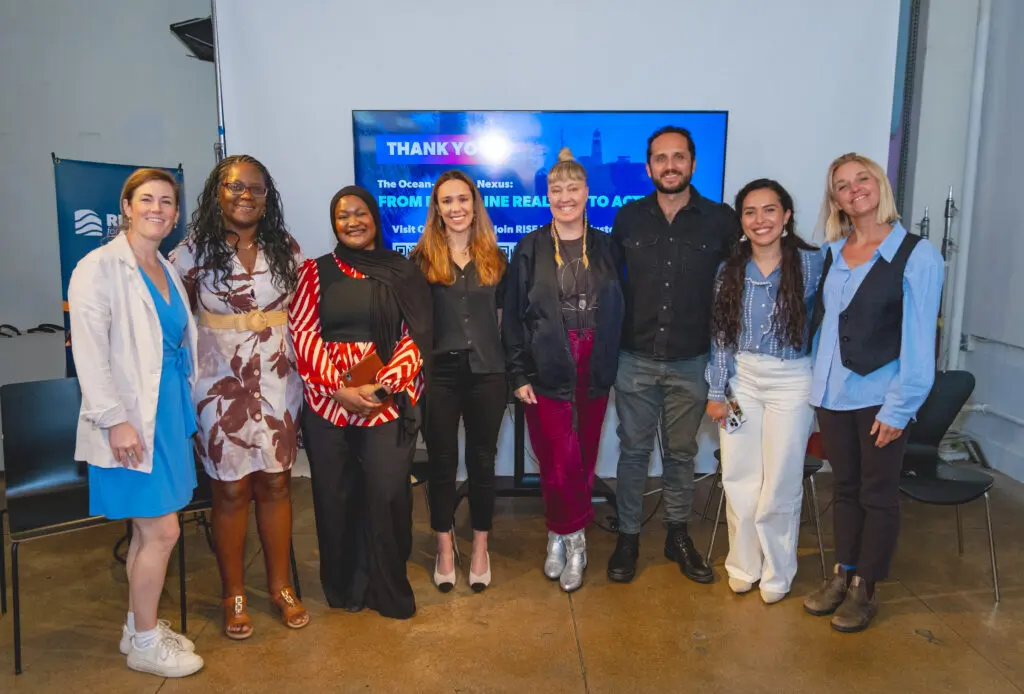
Thank you to all the speakers, partners and guests that joined us for the event in New York! We’d love to hear from those of you reading this; who, where and what are shaping the stories you are telling?
Join the RISE UP network and the Ocean and Climate Cluster through this link.