RISE UP for the Ocean logo in white

‘No more empty pledges’: Civil Society Collective Statement at Our Ocean Conference

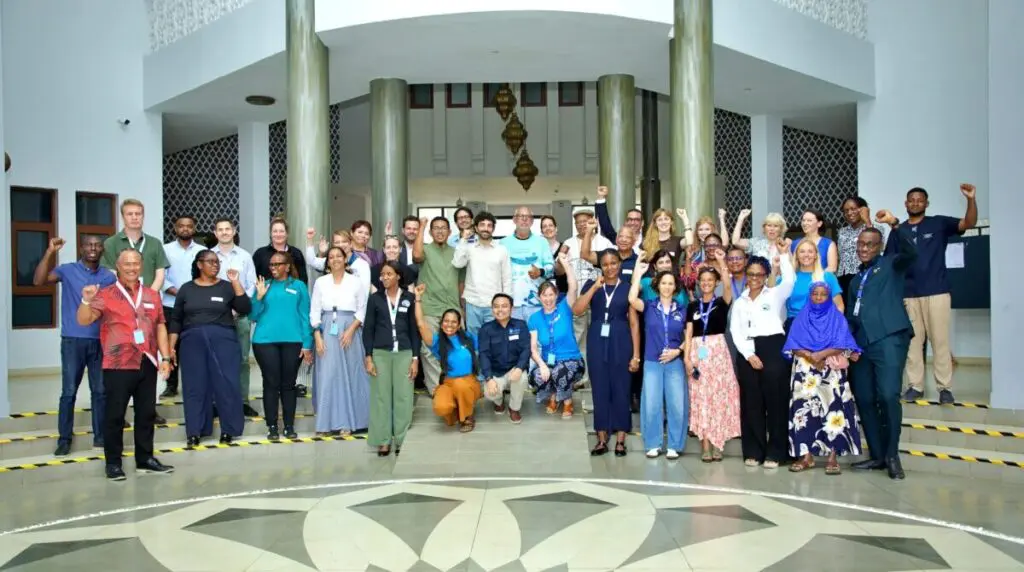
Representatives of small-scale fishers’ associations, Indigenous Peoples’ organizations, youth networks and civil society groups gathered at the RISE UP working session during the 11th Our Ocean Conference in Mombasa, Kenya.

Civil Society and Community Organisations’ Collective Statement

11th Our Ocean Conference | Jun 16, 2026 Mombasa, Kenya

Preamble

We, participants and representatives from small-scale fishers’ associations, Indigenous Peoples’ organizations, youth networks and civil society organizations, convened during the RISE UP working session alongside the 11th Our Ocean Conference

Recognizing international commitments including ILO Convention No. 169, the UN Declaration on the Rights of Indigenous Peoples (UNDRIP) and the UNESCO 2003 Convention for the Safeguarding of the Intangible Cultural Heritage, Kunming Montreal- Global Biodiversity Framework (KM-GBF) and the SSF Guidelines – all of which affirm the rights of Indigenous Peoples’ and small-scale fishing communities to participate in decisions affecting their livelihoods, territories, natural resources and living cultural heritage, we call upon governments, international organizations and development partners to place communities at the center of ocean governance for policy coherence and action at OOC and beyond.

Cross-Cutting Principles for Ocean Governance

All emerging ocean governance processes, policies and initiatives must be grounded on three foundational pillars:

  1. Meaningful Consultation and Engagement
    Governance frameworks must include structured, accessible, timely and genuine mechanisms for communities to participate in decision-making as a core design principle.
  2. Effective Enforcement Mechanisms
    Commitments made within ocean governance processes must be backed by clear, enforceable accountability structures to ensure compliance and protect the rights of Indigenous Peoples and small-scale fishing communities.
  3. Transparent and accessible Financing
    Sufficient, accessible and community-responsive funding mechanisms must be secured and managed transparently to uphold accountability and inclusivity across all levels of governance.

Priority Areas for Action:

Sustainable Small-Scale Fisheries

Small-scale fishers and fishworkers are essential contributors to food security, livelihoods, cultural heritage and sustainable ocean stewardship. Governments must:

  • Establish bottom-up and transparent co-management governance systems that are co-designed and co-governed with fishing communities.
  • Recognize, protect, and strengthen secure, equitable, and socio-culturally appropriate tenure rights to fisheries resources, fishing grounds, and coastal areas for small-scale fishing communities, including women, Indigenous Peoples.
  • Communicate policies, regulations and management frameworks in accessible languages and formats that enable meaningful and effective participation of rightholders including women and youth.
  • Recognize and strengthen the role of small-scale fishers as partners in sustainable fisheries management and ocean governance.

Ocean-Climate Action

Ocean-climate action must be locally led, rights-based, and adequately resourced. We call for:

  • Community-Led Knowledge and Ownership
    Research and solutions must be driven by and for communities. Local, Traditional and indigenous knowledge must be recognized and integrated into climate action frameworks.
  • Accessible and Direct Financial Support
    Financing mechanisms must directly benefit communities and support the institutions that enable community-led climate action.
  • Accountable Progress Tracking
    A clear structure to assess progress is essential, with community-defined indicators. Evaluation frameworks must reflect the role communities play and the findings must be communicated in ways that are understood across all actors – from grassroots communities to international bodies.

Marine Conservation and Communities

Conservation cannot succeed without communities recognized as equal partners. We call for:

  • Government Support and Power-Sharing
    Governments must provide substantive support that enables communities to participate meaningfully in marine conservation. Decision-making power over resource management must be genuinely shared between governments and communities.
  • Recognition of Community-Led Models
    Governments must acknowledge, incorporate, and replicate existing successful models of community-led conservation, and establish platforms for consistent, ongoing engagement between governments, conservation actors, and communities.
  • Accountability and Ecological Monitoring
    Regular assessment of key ecological indicators is essential, with accountability mechanisms that are mutual and structured and consistent in its engagement.

Attendees who were representatives from the organizations below call on all governments and International organizations to honor these demands in policy and practice at Our Ocean Conference and beyond.

Ocean governance that does not include us is governance that will fail both people and the planet.

Download and share the statement here.

Signatories to the statement (representatives in attendance):

African Women Fish Processors and Traders Network – AWFISHNET

Benguela Inshore Fisheries and Harvesting Association (Namibia)

National Commission for Strengthening Extractive Reserves and Traditional Coastal and Marine Extractive Communities – CONFREM (Brazil)

Dahari (Comoros)

Environmental Management and Economic Development Organization – EMEDO (Tanzania)

Hangeneni SSF Association (Namibia)

Indonesian Traditional Fisherfolk Union – KNTI (Indonesia)

Malaysian Inshore Fishermen Association for Education and Welfare – JARING (Malaysia)

Latin American Union of Artisanal Fishers – ULAPA

Maui Cultural Lands (Hawaii)

Moegesukkel Cooperative (South Africa)

Movilizatorio

Namibia Nature Foundation (Namibia)

Nordenfjeldske Development Services – NFDS / Stop Illegal Fishing

Ocean Acidification Alliance

Pan African Vision for the Environment – PAVE (Nigeria)

Regional Government of the Azores

RISE UP for the Ocean

Small-scale fisheries researcher – Moi University (Kenya)

SOA Tanzania

Southeast Asia Small-Scale Fishers Network – SEAFNET

Stop Ecocide International

Swedish Society for Nature Conservation

Swakopmund Small-Scale Fisheries Association (Namibia)

TINTA – The Invisible Thread

West Coast Small-Scale Fisheries Forum (South Africa)
Share this story

Our latest updates

Join the organizations shaping ocean policy

Network membership is open to civil society organizations, community groups, foundations, and research institutions. Members gain access to advocacy resources, policy platforms, collective campaigns, and a global community of ocean justice advocates.
RISE UP for the Ocean logo in white

Uniting people, knowledge and partnerships to create a more equitable ocean.

© 2026. All rights reserved.
Proudly crafted by Conservation.Digital
Secret Link