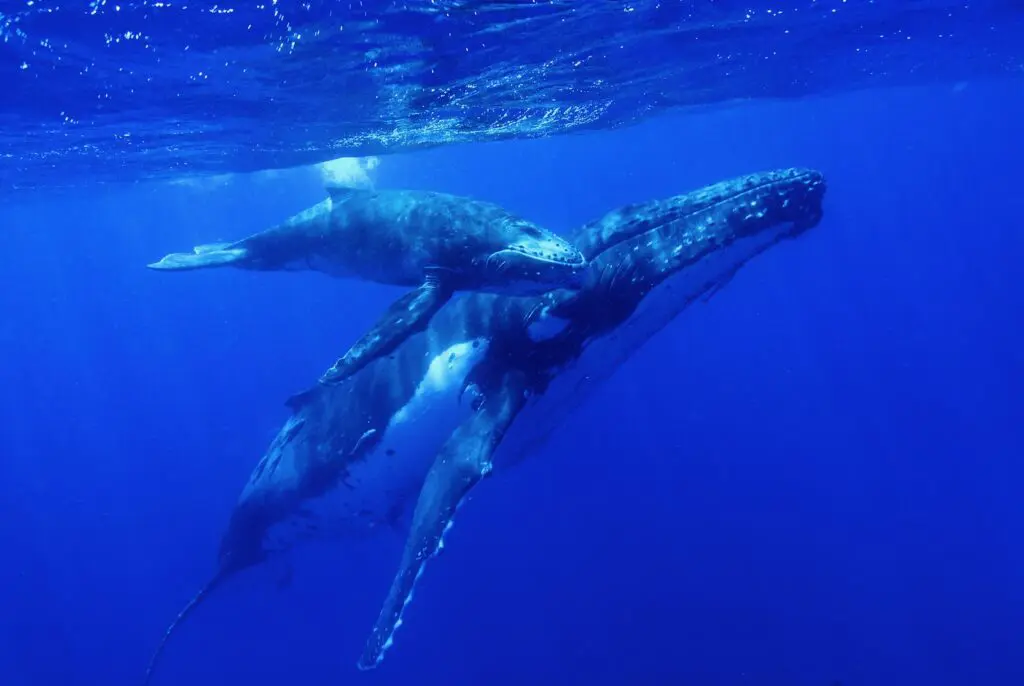

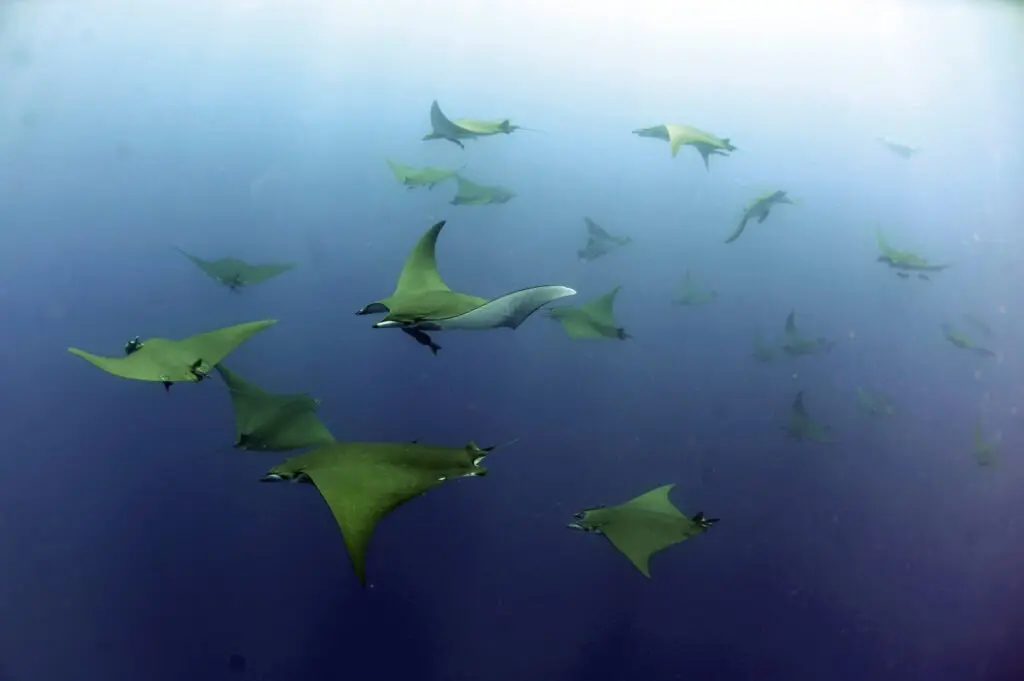
Manta and devil rays are among the ocean’s most intelligent and iconic species, yet are disappearing at an alarming rate. Once largely overlooked as bycatch, all ten species are now facing severe population declines driven by international trade and fishing pressure.
In late 2025, a major turning point arrived. At the 20th Conference of the Parties (CoP20) to the Convention on International Trade in Endangered Species (CITES), governments agreed to grant manta and devil rays the highest level of International protection available.
We spoke with Nuno Barros, Fisheries and Policy Assistant Manager at The Manta Trust, who was on the ground at CoP20, to find out what this decision means, how it came to be and what must happen next to turn policy into real protection for rays.
1. Please can you introduce yourself and let us know a bit about your role with the Manta Trust?
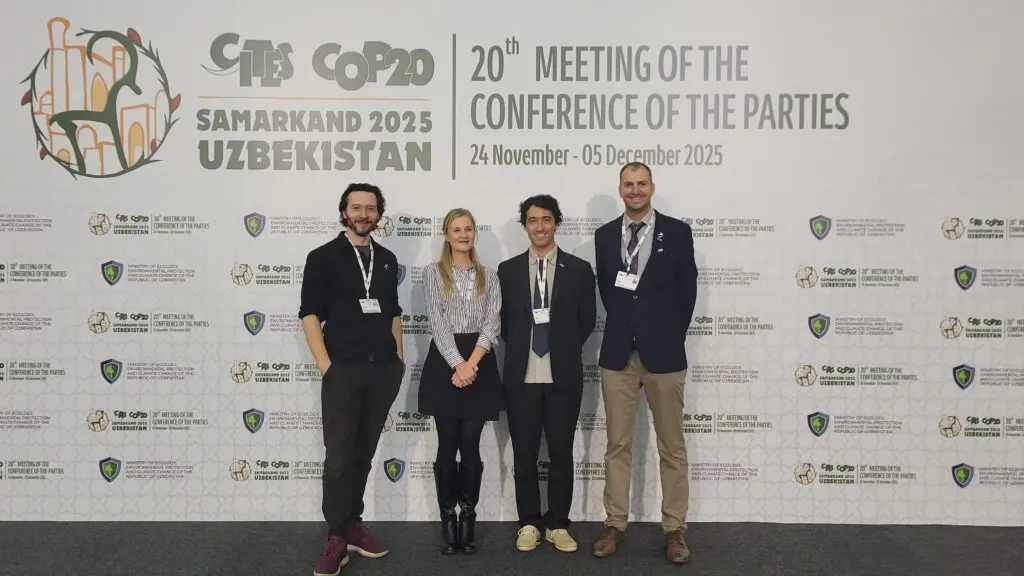
My name is Nuno Barros (pictured 3rd from left) and I am the Fisheries and Policy Assistant Manager at The Manta Trust. The Manta Trust is a UK-registered charity that coordinates global manta and devil ray conservation efforts through research, education and collaboration.
The Manta Trust is a science-based organization, and a great part of what we do is trying to get the best available data and peer-reviewed research. I am, however, not the guy in the water studying these magnificent creatures, but rather one working backstage to protect them.
My job lies mostly in engaging with international policy processes, making sure this scientific informing is part of the decision-making process – advocating for stronger, more effective and enforceable protection for these fast-declining species – and to collaborate in its development alongside country representatives and management entities.
2. How did you become an advocate for rays and why are they so special?
I have been working in marine conservation charities for something like 18 years now, predominantly in wildlife monitoring and conservation projects – mostly seabirds. But I have also been involved in a lot of other areas such as bycatch mitigation, fisheries co-management and plastic pollution.
Manta and devil rays are a recent passion in my life, one that arrived when I joined the Manta Trust a couple of years ago. But I come from the bird world. For quite a few years, in parallel, I owned a wildlife tour company and led fauna and flora tours specialized in SW Portugal, where I live.
There are a few aspects that, in my view, make Manta and Devil rays special, like the fact that they have the largest brain among all fishes – being extremely smart and curious – and how they are born into a pelagic life of perpetual motion.
Also, their conservative life history traits – all 10 species are slow-living and slow-breeding animals that cannot tolerate the current fishing pressure they are subject to, as their populations will just not be able to bounce back. Our recent research estimates that ~265.000 individuals are caught annually, predominantly in the Indian Ocean.
3. Tell us about the recent CITES Conference – what is it and why were you there?
The Convention on International Trade in Endangered Species of Wild Fauna and Flora (CITES) is a global UN agreement aiming to ensure that international trade in wild species is legal and doesn’t threaten their survival. It is perhaps the most vast (185 countries out of 193 are Parties) and legally binding for the countries. This is the convention that ended things like whaling and the ivory trade.
The recent CITES COP (Conference of the Parties) held in Uzbekistan was the 20th gathering of these countries, that happens once every 3 years, to make decisions on species listings under CITES.
One of the proposals on the table, led by the government of Ecuador, was to uplist all species of Manta and Devil rays to Appendix I. This is the highest protection level under CITES, and is reserved for species in risk of extinction. It basically prohibits all legal international trade of manta and devil rays and their products. We were at COP20 to support this proposal and inform on the science and urgency behind it.
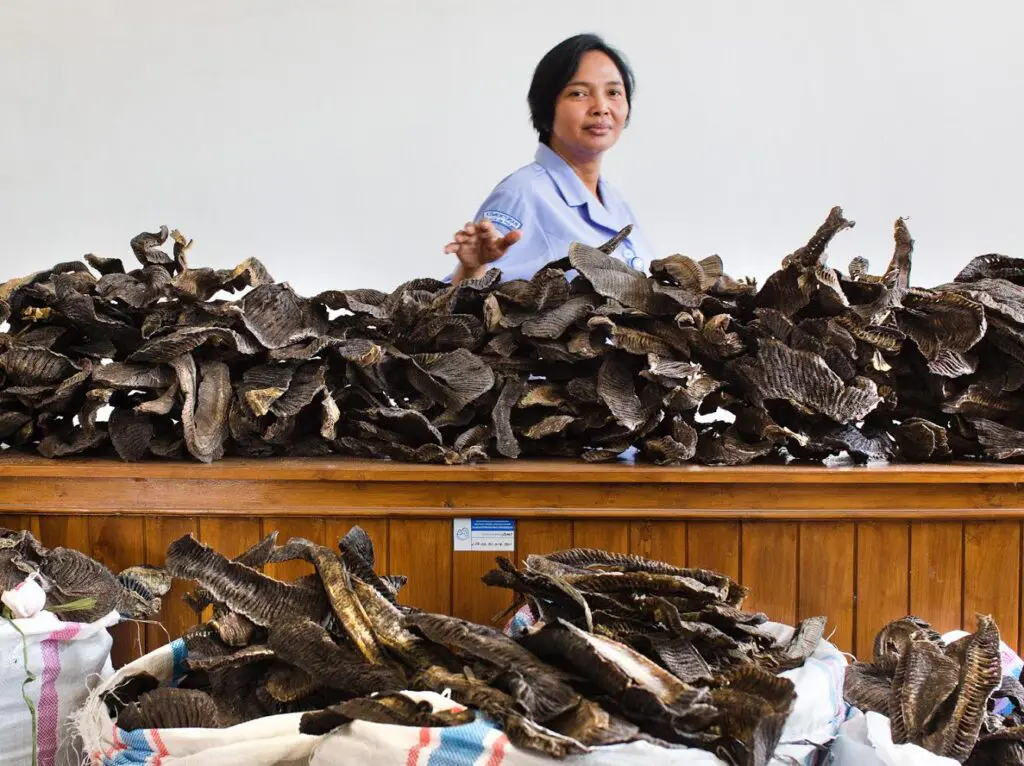
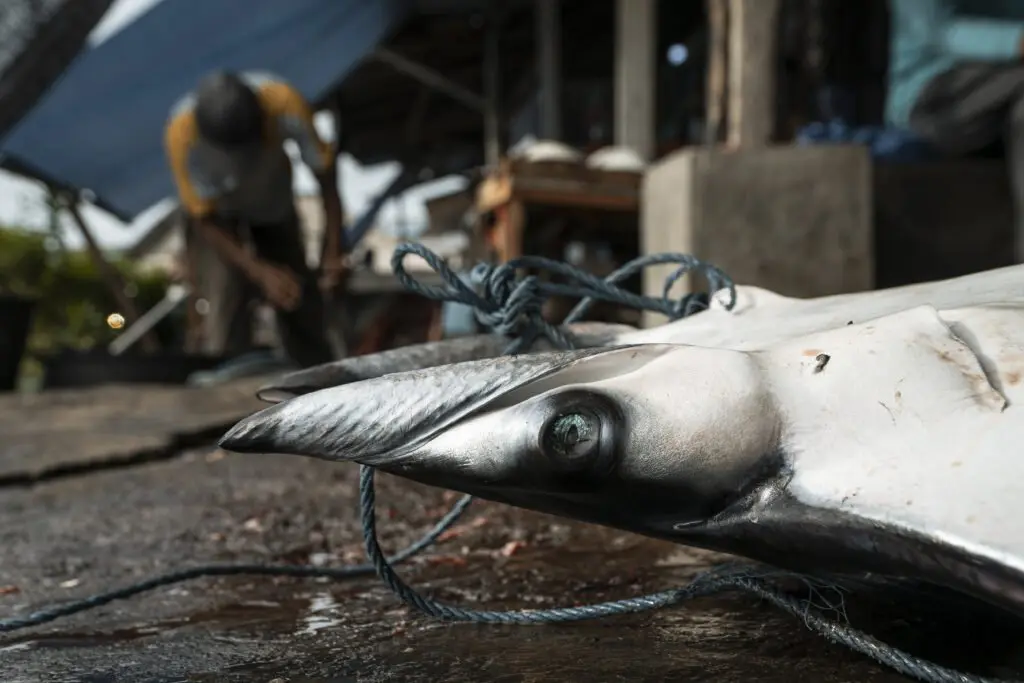
You must know, all species have had declines over 80% in recent years, and 3 of them were recently reassessed by the IUCN as Critically Endangered (CR) – the last category before extinction in the wild. This is fueled mostly by international demand for their gill plates and domestic demand for meat consumption – which leads to generalized overfishing, mostly through retained bycatch.
4. What were the big wins for sharks and rays at the Conference?
There were 7 shark and ray proposals on the table representing more than 70 species. Three of these proposals were for Appendix. I (Manta and Devil rays, Oceanic White Tip and Whale Sharks). And all of them passed! The Manta and Devil Ray one wasn’t even put to a vote, as there was consensus in its adoption by the Parties.
Unlike other iconic species, such as Elephants or Whales, humans find it harder to empathize with fish. The sheer notion that fish are wildlife worth protecting and not merely fishing resources to dispose of, is a relatively recent one in international policy. With steep and accelerating fishing-driven declines, and ecological characteristics that cannot withstand them, sharks and rays desperately need the protection that science has long been demanding for them.
5. What happens now – how will a trade ban be enforced globally?
CITES only stops legal international trade. But the illegal one doesn’t magically disappear. Make no mistake, all sharks and rays that were protected at COP20 are still being caught all over the world, every day. Now it’s time to make sure protection is not just on paper, but on the ground, where it is needed.
With all international legal trade banned, we will focus on tracking down illegal trade, improving enforcement capacity and developing national protections – especially in high-mortality range states. And in addition, continuing to develop research on fisheries landings, population trends, estimates, distribution and involving communities through our affiliate network and collaborators.
The CITES uplisting was not the end – only a new beginning.
6. How can we use this shift to create more momentum for the protection of the ocean and marine species?
Manta and devil rays are iconic species. Symbols of an underwater world in peril. The fact that they were given the same protection level as Great Apes, Tigers or Pandas shows us that the world’s leaders recognize how endangered they are.
We can now be more confident that political support may exist in the future to develop national policies in countries that don’t have them, and to perfect enforcement in others that already have protective legislation in place.
7. Do you have any call to actions for people reading this – how can folks RISE UP for Manta rays?
From an institutional point of view, I would urge people to follow the Manta Trusts’ work and support it. Get involved in our campaigns, such as the #savethemantas: www.mantatrust.org/save-the-mantas.
From a personal point of view, I would point out that Manta and Devil rays are indicator species. Declines in their populations mean deeper problems down below, reflecting the health of the world’s oceans. Don´t lose heart and get involved locally in marine conservation initiatives in whatever ways you can. Change starts at home and in your community. Your voice matters as it creates a snowball effect that ripples out into the world. Oh, and be mindful of what’s on your plate.
Manta Trust are a RISE UP network member, visit their website here: www.mantatrust.org
The views in this interview may not necessarily represent the views of other RISE UP network members or RISE UP as a whole. It is only through open dialogue and a diversity of ideas that we will arrive at the solutions necessary to restore Ocean health.