
COP 30 in Belém, Brazil, marked a critical inflection point in the global response to climate change — and a pivotal moment for ocean and coastal communities. Hosted in the Amazon region, it carried the spirit of the communities most exposed to climate breakdown: small island states, coastal fishing villages, and Indigenous peoples whose lives are shaped by the sea.
For RISE UP, COP 30 was a priority moment. We pressed for the ocean-climate nexus — long under-represented in UNFCCC processes — to be central to the Belém outcomes, and for ambition to be matched by justice: loss and damage finance, meaningful coastal community participation, and ocean-based climate solutions that serve the people who need them most.
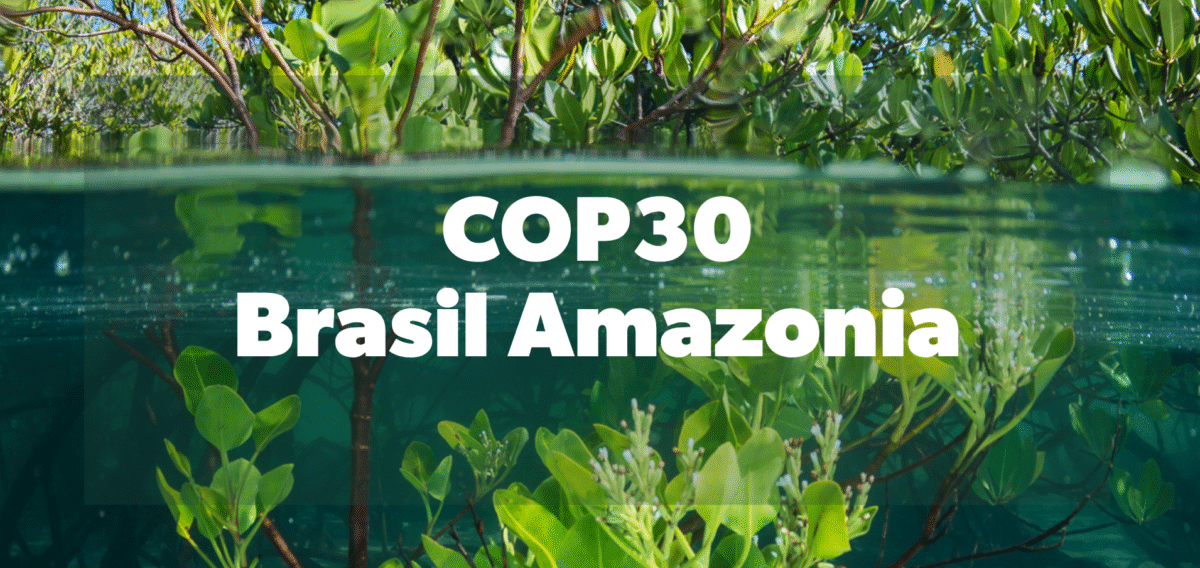
The 2025 Conference of the Parties (COP30) to the United Nations Framework Convention on Climate Change (UNFCCC) took place in Belém, Brazil, from 10 to 21 November 2025, at the heart of the Amazon basin — one of the world’s most vital ecosystems.
It was the first COP to be hosted in the Amazon region, a place that symbolizes both the urgency and the opportunity of climate action: protecting nature, people and our shared planet.
Why was this significant?
COP30 was a turning point. With just five years left to meet the goals of the Paris Agreement, it was a moment for governments, industry and civil society to accelerate action to keep global temperature rise below 1.5°C.
Belém, where the forest meets the ocean, was a powerful reminder that land and sea are inseparable in the fight against climate change. The decisions taken there matter for the future of our blue planet — from mangroves and coral reefs to the livelihoods of coastal communities.
Marinez Scherer (Special Envoy for the Ocean)
For the first time, the official COP agenda included a dedicated objective on ocean conservation and restoration — a historic step toward integrating the ocean into global climate action.
Representing this commitment is Dr. Marinez Scherer, Brazil’s Special Envoy for the Ocean. A marine biologist and coastal management expert, Dr. Scherer coordinates the Integrated Coastal Management Laboratory and serves as Associate Professor at the Federal University of Santa Catarina. RISE UP’s Khadija Stewart interviewed Dr. Scherer in the run-up to COP30; watch their conversation below.
Dr. Scherer’s appointment as Special Envoy was both a milestone and an honour — a clear signal of Brazil’s determination to place the ocean at the heart of climate negotiations.
At COP30, Marinez’s role was to act as a key liaison between the ocean community and the COP30 Presidency, helping to ensure that the voices, knowledge and priorities of the ocean sector were heard at the highest level. Her leadership strengthens the bridge between science, policy, and practice — and embodies the spirit of collaboration that defines the RISE UP movement.

The Brazilian Presidency of COP30 invited the world to join a great global effort for climate action — not just as participants, but as co-creators of change. The call was a firm and inspiring summons to collective mobilization, bringing together governments, social movements, youth, Indigenous peoples, traditional communities, the private sector, academia and civil society. Each has an essential role in building a movement that transcends borders and connects territories.
Mutirão — meaning collective effort — was more than a theme; it was framed as a living, ongoing process that began before COP30, continued through it and extends beyond it. It aimed to transform the conference into a true milestone of civilizational change: creating spaces for active listening, strengthening ties between local and global action and valuing the diversity of voices and knowledge that shape our shared future. For RISE UP, mutirão embodies the essence of our movement: collective action for a thriving ocean and a just climate future.
Meet the RISE UP representatives
RISE UP supported four advocates to take part directly in COP30, championing the inclusion of youth, coastal communities and Indigenous peoples in ocean-climate decision-making. Too often, others speak for communities; this time, local leaders spoke for themselves, bringing lived experience and solutions into the room. These representatives are helping to shape the narrative for a just, blue future.
Meet the four fellows below, and read more about their experience in COP30: A Just Blue Future Begins at the Frontlines.



The Virtual Ocean Pavilion
The Virtual Ocean Pavilion provided a dynamic space for global participation — connecting ocean advocates everywhere to key discussions, events and ocean-climate updates from Belém, with interactive sessions, live streams and exclusive interviews throughout the conference.

The 2025 Pavilion offered a rich programme of inspiring events, expert roundtables and interactive experiences showcasing the ocean’s vital role in climate action, and RISE UP had its own booth. The Pavilion ran for the duration of the conference, with on-demand content available until 22 December 2025.
During COP30, RISE UP aimed to make the ocean an integral part of climate action by channelling funding and ambitious blue commitments, strengthening the biodiversity-climate-ocean nexus and elevating frontline voices.
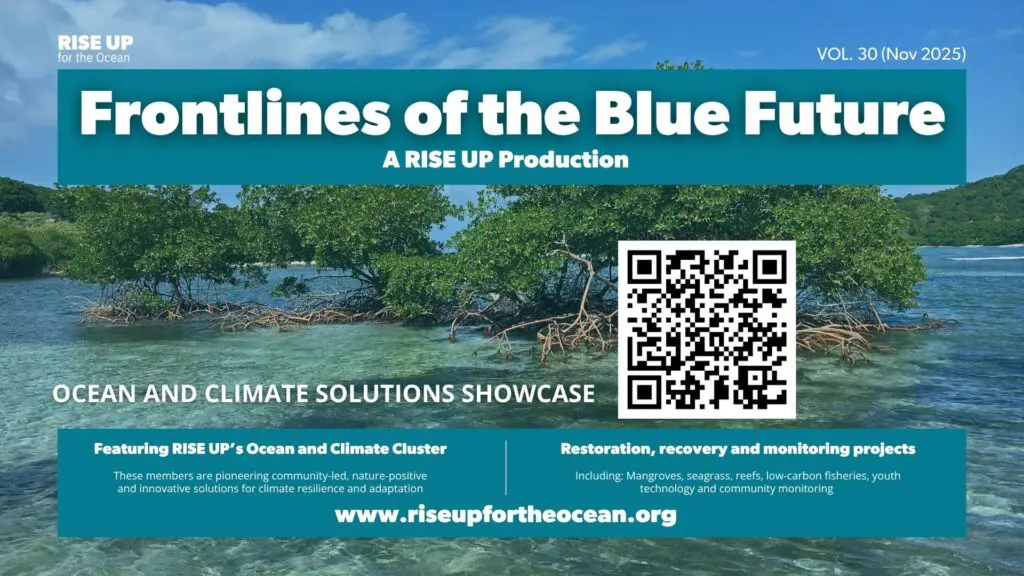
See the “Frontlines of the Blue Future” exhibition, which also featured in RISE UP’s booth at the Virtual Ocean Pavilion.
Watch the recording of our webinar “Cross-Regional Ocean-Climate Action: Bridging Science and Traditional Knowledge”.
RISE UP’s COP 30 engagement was built around three pillars, each designed to maximize civil society impact on outcomes that affect ocean and coastal communities.
Coordinating RISE UP member participation, facilitating pre-COP briefings and helping organizations attending Belém align on priority asks and advocacy strategies. Strength in numbers, guided by strategy.
Hosting and co-hosting COP side events focused on the ocean-climate nexus, small-scale fisheries, and loss and damage for ocean-dependent communities. Putting frontline community voices at the heart of the conversation.
Engaging with negotiators to push for ocean-friendly NDC language, adequate loss and damage finance for coastal nations, and inclusion of ocean-based solutions in the global stocktake — tracked, followed up, and reported back to the network.
For our assessment of what COP30 delivered — and what it didn’t — for the ocean and frontline communities, read COP30: Tripling Adaptation Finance and Ocean Leadership, but Outcomes Fall Short.
The work now continues on the road to COP31 in Antalya, Türkiye, from 9 to 20 November 2026. Follow it in From Dialogue to Action: The Ocean on the Road to COP31, or sign up for The Navigator, RISE UP’s monthly newsletter.