
In June of 2023, after two decades of informal meetings that eventually turned into formal negotiations, the United Nations officially adopted a new treaty that will enable the global community to better protect the two-thirds of the ocean that lie beyond national jurisdiction: the High Seas.
The full, official name of this treaty is the “Agreement under the United Nations Convention on the Law of the Sea on the conservation and sustainable use of marine biological diversity of areas beyond national jurisdiction”—that’s a bit of a mouthful, so as a shorthand, it is often referred to as the “BBNJ Treaty” or, even more colloquially, the “High Seas Treaty.”
The current system of ocean governance consists of a patchwork of dozens of organizations that manage different aspects of human activities, in different regions of the world, to varying degrees of success. And in this patchwork system of management, the conservation of incredible marine life and ecosystems has often fallen through the cracks. The impacts of this incohesive governance framework are compounded by other human-caused pressures, such as overfishing and marine litter, exacerbating the degradation of marine environments.
The successful conclusion of the High Seas Treaty negotiations was hailed as a win for multilateralism and offered a ray of hope in a world where breaking news related to the environment is often grim. And the substance of the Treaty is worthy of celebration—it offers humankind a real opportunity to change the way we conserve and use the ocean. This new BBNJ Treaty provides:
Finishing the BBNJ negotiations was a major victory, but a few important hurdles remain before the words of the treaty text can be turned into action.
While the United Nations adopted the treaty in June 2023, it won’t enter into legal force until 60 countries formally ratify it. Only after the treaty has entered into force can countries work together to implement it and use it to create new High Seas protected areas. At the time of this writing, the BBNJ Treaty has 86 signatures (a signature indicates an intent to be legally bound but is not the same as ratification) and a few weeks ago, the world celebrated the first formal ratification (Palau). To see the most up-to-date information on which countries have signed and ratified, you can check out the official UN Treaty Page or, for a more colorful visual, the High Seas Alliance’s Ratification Tracker.
But there’s work that can be done now to help fast-track the implementation of the treaty. Collaborating with colleagues from around the globe, we’ve identified some key next steps:
The High Seas support a diversity of marine life and ecosystems that are critical to the health of the ocean, climate, planet and people. They are highly vulnerable to the impacts of climate change, plastic pollution, overfishing and other human activities. The global community has set a goal of protecting 30% of the ocean by 2030 and with only about 1% of the High Seas protected. The new BBNJ Treaty can play a critical role in reaching that global conservation target, but only after it has entered into force. Now is the time for the global community to work together towards implementation—our ocean can’t wait.
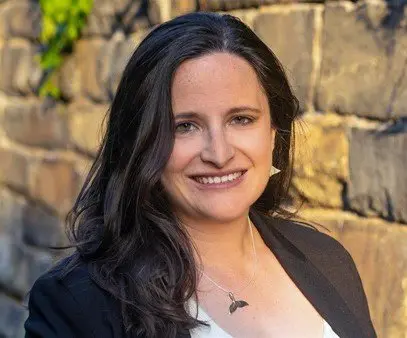
Nichola Clark is a Senior Officer at The Pew Charitable Trusts where she leads Pew’s high seas work under their Ocean Governance project.
Working closely with partner organizations and coalitions, Clark serves as a strategic and technical expert on the BBNJ treaty and specializes on high-seas marine protected areas and the treaty’s interaction with other management bodies. She also serves as the co-lead for the IUCN World Commission on Protected Areas High Seas Specialist Group.
This is a guest blog and may not necessarily represent the views of other RISE UP network members or RISE UP as a whole. It is only through open dialogue and a diversity of ideas that we will arrive at the solutions necessary to restore Ocean health.