
Written by: Marie-Céline Piednoir, Rise Up Advisory Board Member and Positive Ripple Consulting Founder
Around the world, coral reefs are reaching a breaking point. With “more than 70% of reefs already threatened by climate change” and mass bleaching events sweeping across entire ocean basins, the urgency to act has never been greater.
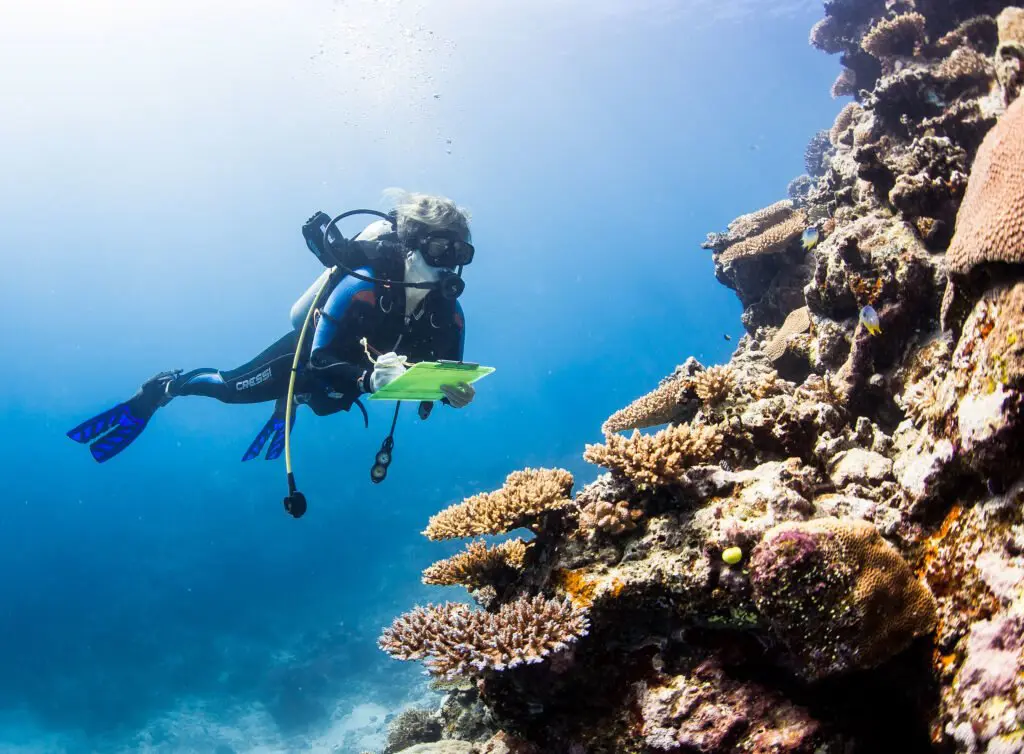
Yet even in this moment of crisis, science is giving us a path forward. Research, such as the 50 Reefs study, shows that some coral reefs, those with the greatest capacity to withstand warming, can continue to support biodiversity, fisheries and coastal communities. Protecting these climate-resilient reefs is now one of the most strategic investments the world can make for nature, people and climate adaptation.
“The science is clear: some coral reefs are more likely to withstand future climate extremes, but only if we protect them now. This commitment helps turn cutting-edge science into real policy action.” – Emily Darling, WCS Director of Coral Reef Conservation
It was this insight that led 11 governments and 22 global partners to join WCS in launching the Climate-Resilient Coral Reefs Commitment at the UN Ocean Conference in Nice in June 2025. The Commitment is the first political pledge focused specifically on safeguarding the reefs most likely to survive climate change.
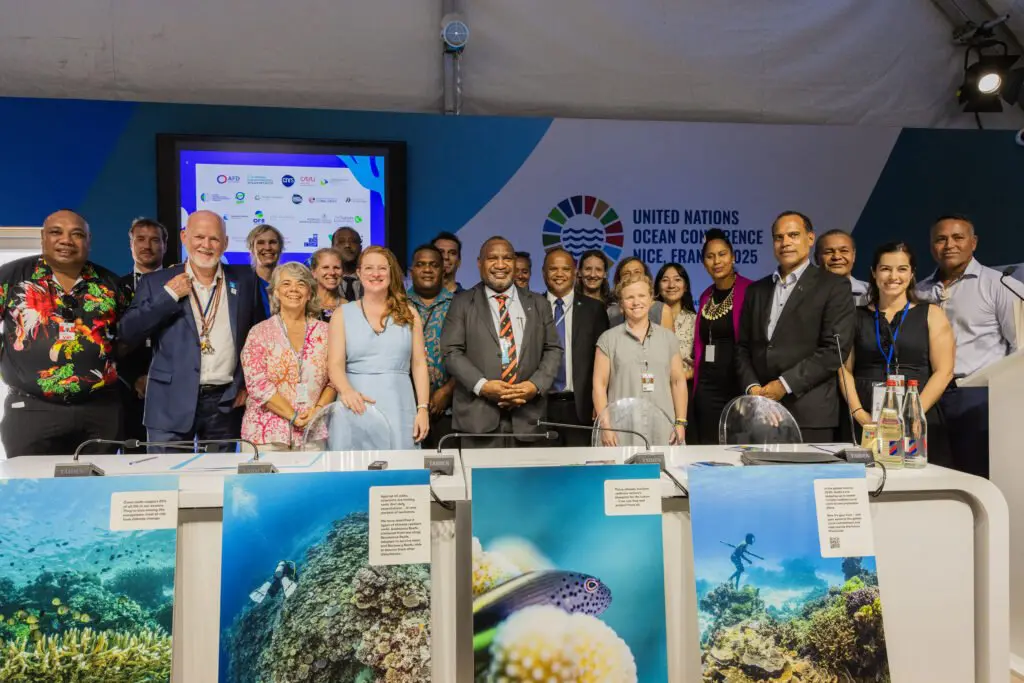
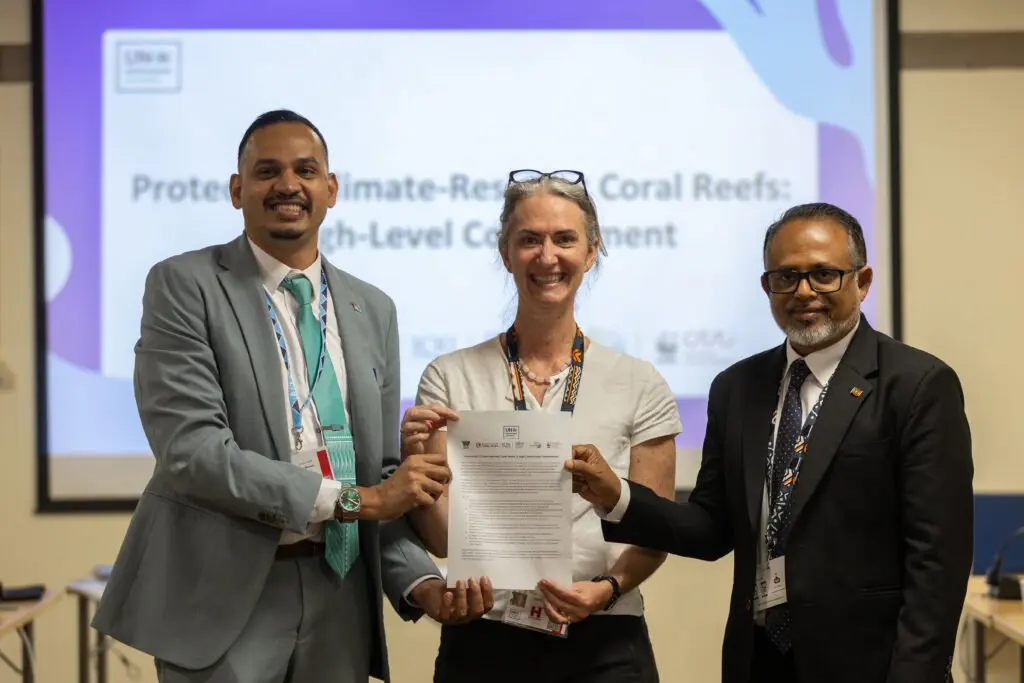
Momentum continues to build, with Brazil officially signing the Commitment during COP30 in Belém (Brazil), and Australia, Fiji, and the Maldives joining the initiative during UNEA-7 in Nairobi (Kenya).
Governments signing on pledge to

This work is deeply connected to the goals of the Coral Reef Breakthrough, which calls for securing 125,000 km² of reefs and mobilizing US$12 billion in finance by 2030. By turning global goals into national-level political action, the Commitment is building a powerful coalition that brings science, policy, and political leadership together into a unified effort to protect coral reefs that can endure a warming planet.
What’s at stake is critical. Coral reefs cover less than 1% of the ocean, yet they support a quarter of all marine life and nearly a billion people. They generate an estimated US$375 billion each year in food, tourism and coastal protection, acting as natural breakwaters that can absorb up to 97% of wave energy. Safeguarding the reefs with the greatest chance of survival is essential not only for biodiversity but also for the security and resilience of coastal communities that depend on them.
“Climate-resilient reefs are a cornerstone of global climate adaptation. By uniting governments and partners, this commitment strengthens our collective ability to protect reefs that can survive – and help communities to thrive – in a warming world.” – Rachel James, WWF Global Coral Reef Rescue Initiative (CRRI) Lead
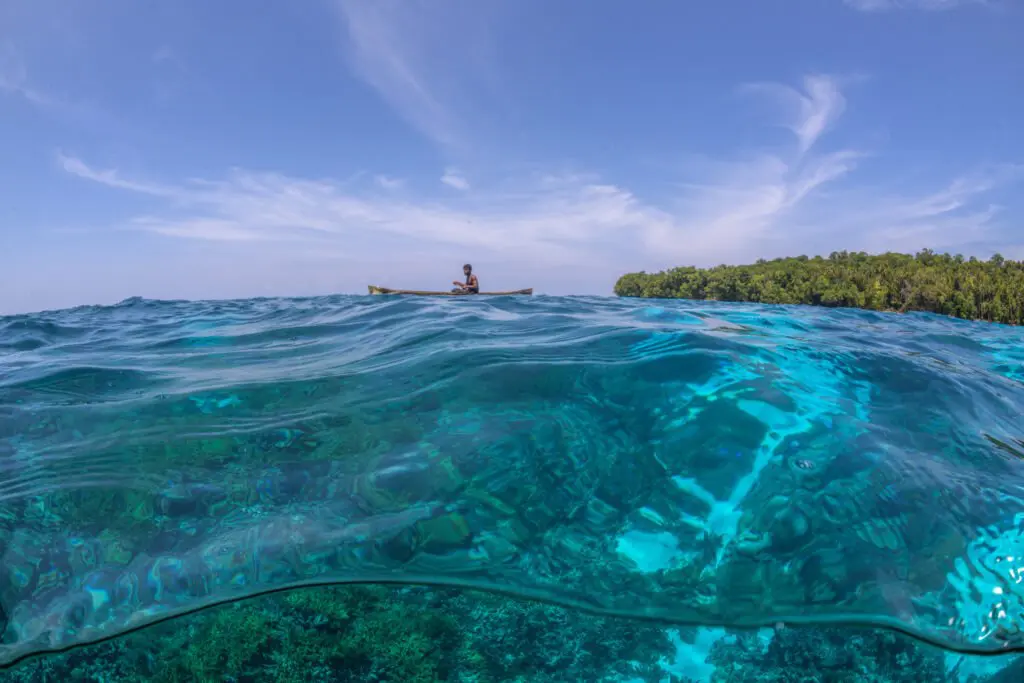
Looking ahead, the goal is ambitious: to reach 31 government signatories by COP31, representing more than 90% of the world’s coral reefs. With climate impacts accelerating, the next twelve months will be critical for expanding this coalition and scaling the actions needed to protect these irreplaceable ecosystems.
If your government or organization is ready to join the growing global movement for climate-resilient coral reefs, we invite you to reach out.
Together, we can help secure the future of the reefs most likely to survive, and with them, the communities and ocean life they support.
For more information or to sign the Commitment, please reach out to Marie-Céline Piednoir: marieceline.piednoir@gmail.com
For more details about the Commitment, please refer to this two-pager.
For more on why collective action is vital to protect coral reefs, read the Together for the Ocean Essay by Alfred DeGemmis (WCS) and Rachel James (CRRI).
References: IPCC. 2021. AR6 WGII – Ch. 3: Oceans & Coastal Ecosystems. Hughes, T. P. et al. 2017. Global warming and recurrent coral bleaching. Nature 543: 373–377. UNEP. 2020. Projections on Coral Bleaching in a Warming World.
Written by: Marie-Céline Piednoir, Rise Up Advisory Board Member and Positive Ripple Consulting Founder.
This is a guest blog and may not necessarily represent the views of other RISE UP network members or RISE UP as a whole. It is only through open dialogue and a diversity of ideas that we will arrive at the solutions necessary to restore Ocean health.