Caner Bayrak is the General Coordinator and a Board Member of the Mediterranean Conservation Foundation (Akdeniz Koruma Vakfı) in Türkiye. He links global climate finance with frontline coastal protection, and since joining Akdeniz Koruma in 2019 he has helped scale models that put local fishers at the centre of protection, including Türkiye’s first Marine Ranger system and market-based initiatives that support small-scale fishers adapting to a warming Mediterranean. RISE UP met up with Caner at COP31 in Antalya, to ask him what protection looks like on the ground.
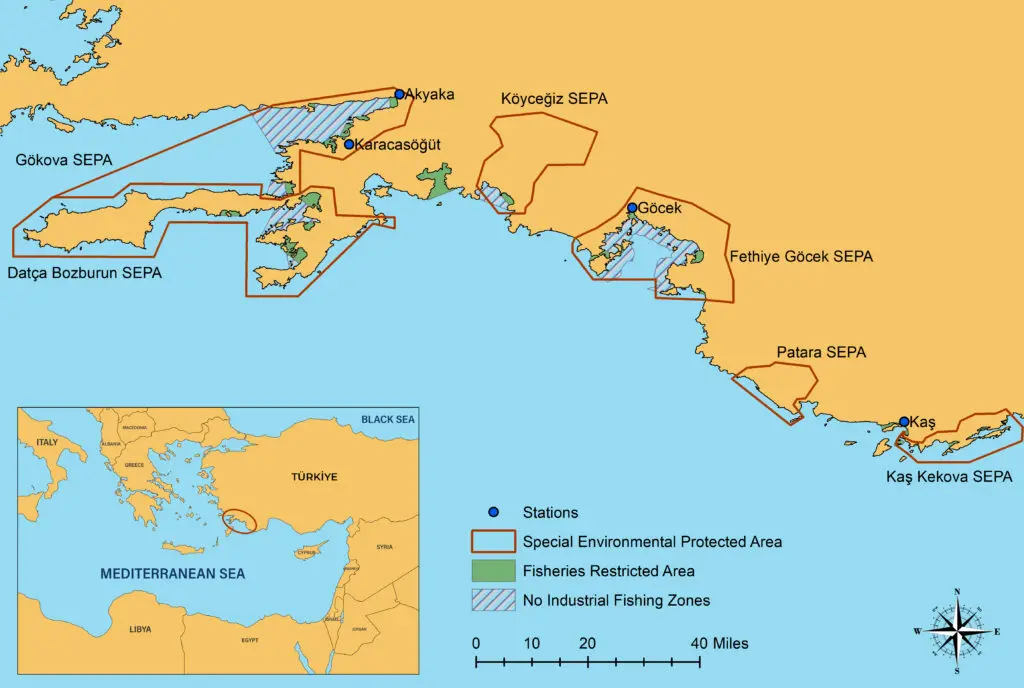
Türkiye does not have a single legal term for a marine protected area. Marine and coastal zones are protected under several designations, mainly Special Environmental Protection Areas (SEPAs, Özel Çevre Koruma Bölgesi), such as Gökova, and Marine National Parks (Deniz Milli Parkı).
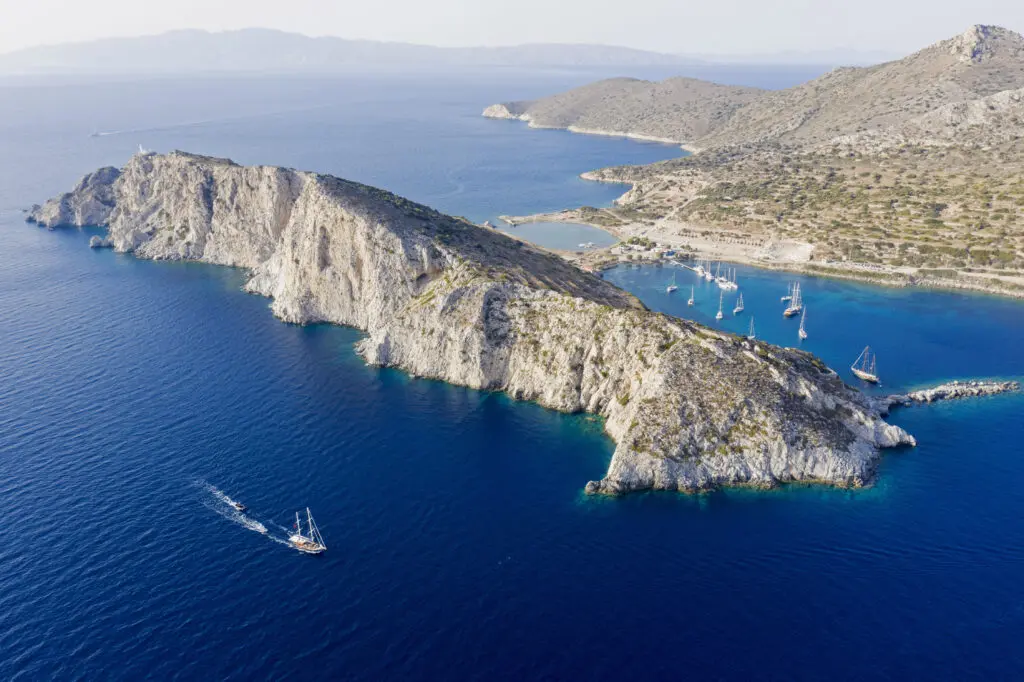
Gökova has been a SEPA since 1988, but that designation alone didn’t stop fish stocks from declining. Fishers saw their catches falling, so in 2013 the fishing cooperative, local NGOs and the Ministry declared no-fishing zones inside the SEPA, based on scientific site selection. The idea was simple: give fish places to recover, and the benefit spills over to the fishers outside. We have monitored the same underwater sites since 2013, and the difference is now clear: over the last five years, the no-fishing zones held about twice as much fish biomass as the areas open to fishing, and around 80% of it was native species, while invasive species dominate outside.
But declaring an area is only the start. The main issue is enforcement. We realised that other people were still fishing in the protected area, so we needed rangers. Then there’s the pressure on the sea: trawlers in the bay, especially in winter, ghost nets, invasive species arriving as the water warms, and funding that’s too short-term. In some places we’re already too late. The Marmara has collapsed (see footnote), and now we’re discussing rehabilitation, and restoration is more expensive than protection. We know that, so we should behave accordingly.
It started in 2013, when the no-fishing zones were declared in Gökova Bay. We realised there needed to be enforcement, because fishers weren’t going there, but other people still took fish from those places. So we chose two people from the cooperative, who were fishers. If you bring someone from outside the area, no one cares and no one listens. It’s a full-time, paid job: they patrol in the morning and at night, and when something happens they’re always ready. They also do rescues with the Coast Guard. In 2019 a big projectadded three more ranger boats to the two we had, more than doubling our capacity, with new no-fishing areas. That brought difficulties too, because the new areas are harder to manage. But Gökova is still the best example. Our rangers are all local, and wherever possible they come from fishers or fishing families.
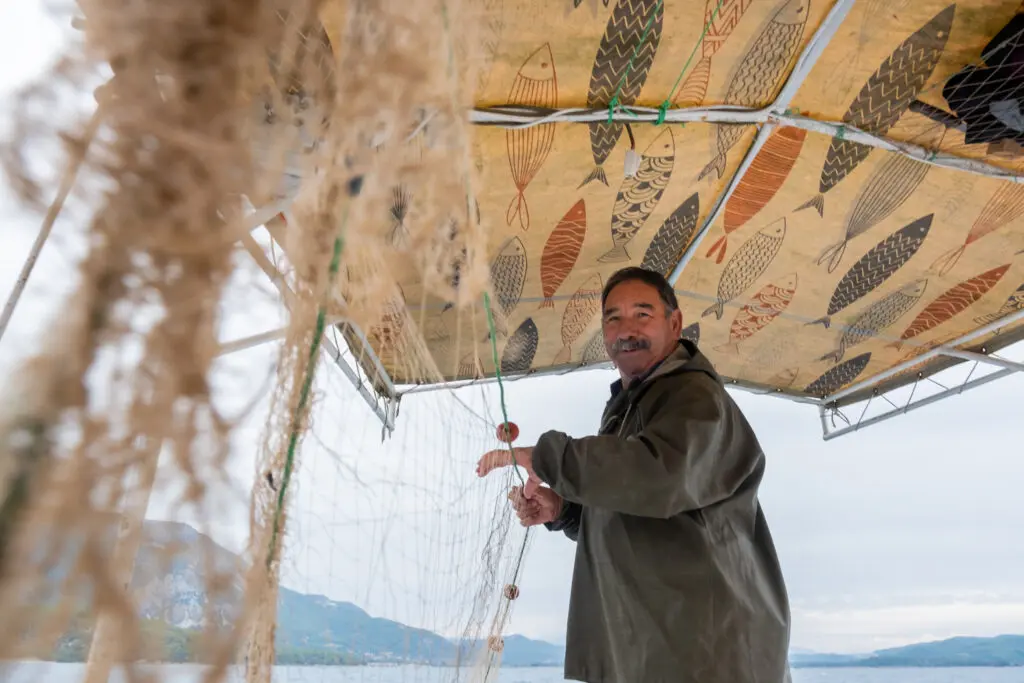
Local fisher. Credit: MCS
Honestly, local protection cannot stop the ocean from warming up. That’s one of the realities. But we have tools to deal with the results. We’ve had temperature loggers in our protected areas since 2015, and warming is one reason invasive species keep arriving. So we started supporting the fishing cooperative to sell these new fish, with tasting events for locals. In Akyaka, these new species now make up around 30% of the cooperative’s catch by weight. In 2020 we did the same for the lionfish. At the start, fishers just threw them back because there was no market. We bought them from the fishers and sold them to restaurants with new recipes, and it became famous. There’s a term: “eat them to beat them”. They came and they won’t go back, so for the edible ones we have a chance. The pufferfish is the real problem. It cuts the nets, and some fishers say they are quitting because of it. They say one fish can destroy 10 or 20% of a net. The government pays a little for the tails, but that’s only a short-term solution.
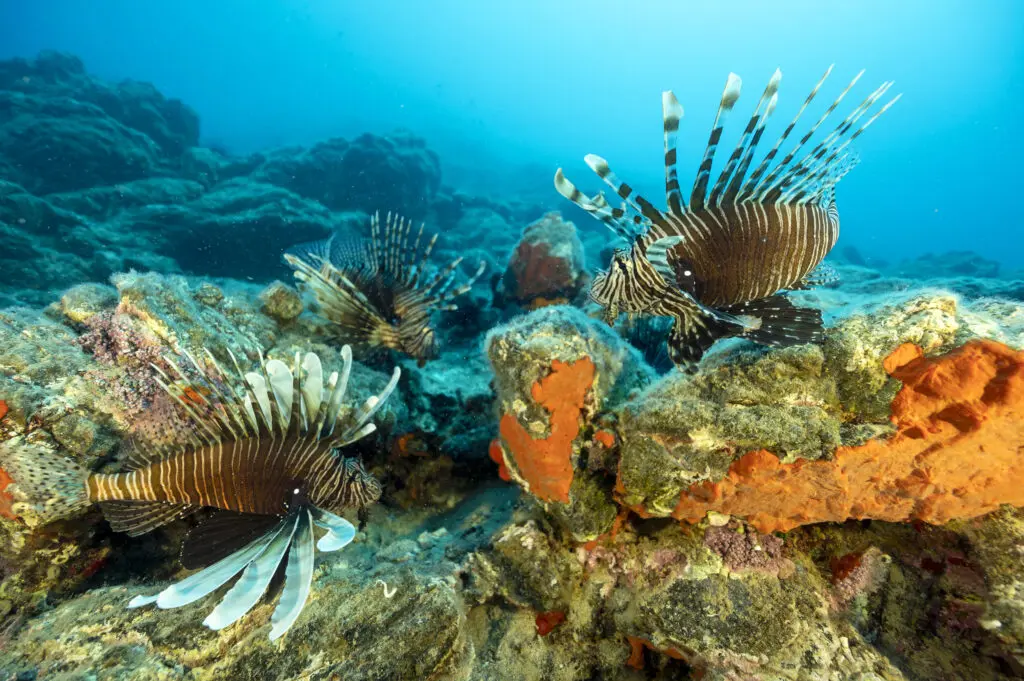
Invasive lionfishes, Gokova Bay Turkey. Credit: Pterois Miles
It must be. I was in Girona recently for a meeting with groups from all around the Mediterranean, and the blue crab came up. In Türkiye it’s edible and sells well, but in Tunisia it’s a huge problem. It’s hard to generalise, because the cultures are so different. But the lionfish is moving on to Greece, then Italy, France and Spain. We know many recipes for it, so we must warn them and teach them how to deal with it.
It’s difficult. There are many projects in Gökova, from us, other NGOs and the government, and sometimes they overlap. We need to manage funding more effectively at the local, national and international level. Funding is also getting harder, because there are more NGOs and more problems, and it’s too short-term. Our projects last five or six years, but protection takes longer to show results. We need long-term projects with higher budgets. When something happens in a forest, everybody can see it, even from space. But we have no idea what’s happening under the water. Fish are disappearing, there’s pollution, there are ghost nets, and no one sees them, so we behave as if nothing happened.
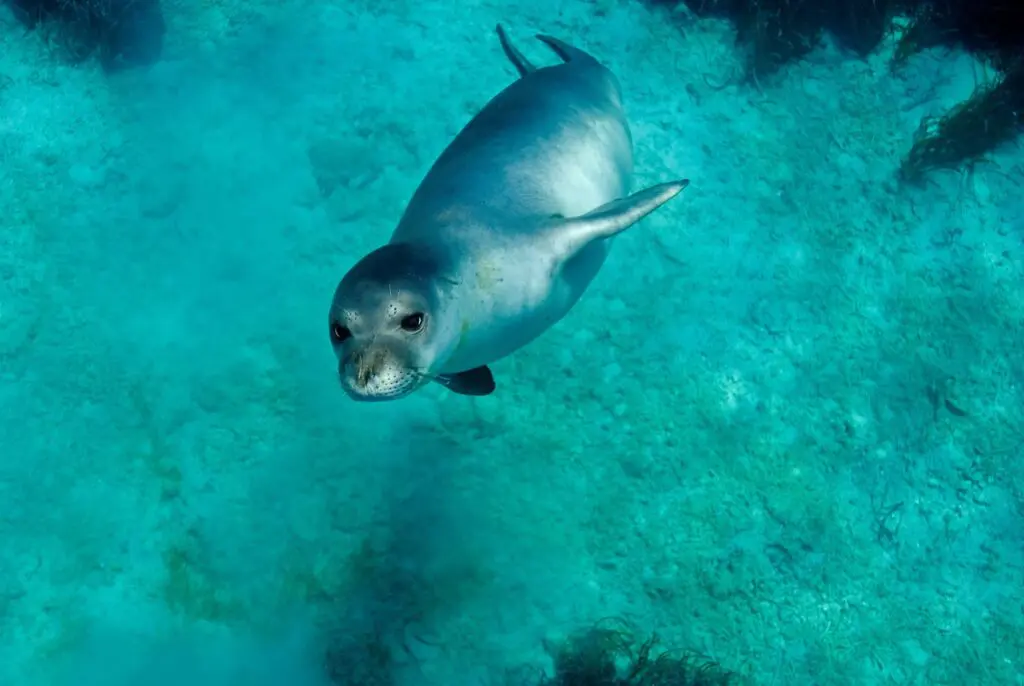
There are only around 100 to 120 Mediterranean monk seals (Monachus monachus) that live along Türkiye’s coastline, making the country one of the last strongholds for the world’s rarest seal species. Credit: Zafer Kızılkaya
It’s a difficult question. We had the 30×30 target, it’s already decided, but now we think it won’t be possible by 2030. Who is responsible? We aren’t asking that loudly enough, because it’s a target we created and didn’t reach yet. Putting the ocean on the agenda is good. It’s too late, actually, but it’s better than nothing, and every day it gets later. A declaration is maybe 20% of the process. The real results come with enforcement. Who is going to enforce, and with what money? What comes out of COP should be obligatory for everyone. Every year we meet and discuss, but nothing happens. We need more action than discussion. And if businesses make money from the sea, they must pay it back, without any doubt.
It’s really difficult for Türkiye. We’re in a big dilemma. There’s an energy crisis, and the region has been built on wars, so it’s hard to make promises. But Türkiye must act. We have very few fossil fuels of our own, but we consume a lot, so we should be part of the solution, not the problem. I’m not expecting a 30×30 target in the next five years, that’s not realistic. But we need to hear something real about the long term: what happens in 10 years, in 20? If they say they need five or ten more years, come on, it’s too late already.
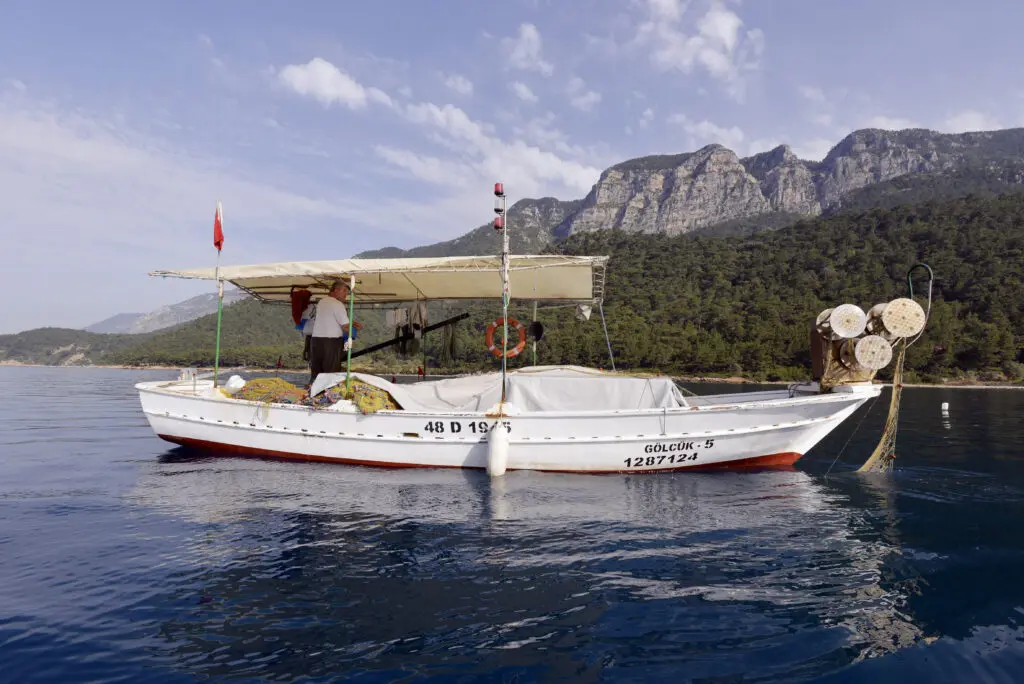
Credit: Zafer Kızılkaya
From the ground, because people are struggling. They’re looking for a solution and they’re forcing their governments to do something. People come from all around the world, even Indigenous communities from deep in the rainforest , to tell their ministers. At the start of the COP we brought fishers to describe the situation to the ministries, because they face it every day. I don’t think governments can resist. They already gave a lot of promises: new protected areas, enforcement, new funding. Where is it?
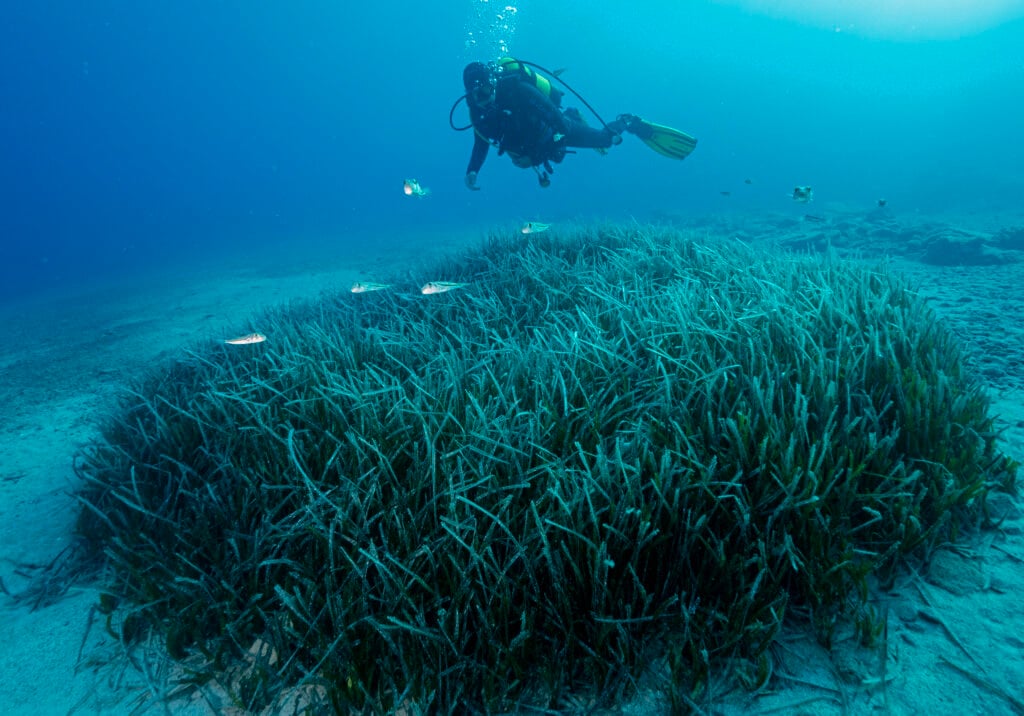
Patch of Neptune seagrass meadow with invasive pufferfish, Torquigener flavimaculosus, Gokova Bay MPA Turkey. Credit Zafer Kızılkaya
Before COP31, Türkiye announced two new marine parks, one in the Aegean and one in the Mediterranean. They don’t regulate anything yet, but they asked NGOs, including us, for input on the regulations. That’s a good start. But we need more protected areas and real enforcement, otherwise it’s just paper parks. And our main target is to keep protecting Gökova, which has worked since 2013.
I know their job is difficult. When we do local socio-economic monitoring and ask fishers whether they want their son or daughter to become a fisher, about 90% say no. Small-scale fishing in this area is close to disappearing. But they are the real fishers. They bring fish to households and villages, and they aren’t harming the sea the way industrial fleets do. They must resist. They are also the future of enforcement, because they know the place and the fish. That’s why we choose our rangers from the local community, and from fishing families wherever possible. They’re knowledge holders, and it’s a culture we need to keep alive. But regulation has to catch up: bottom trawling is still allowed in some protected areas, even in Europe. We must push governments, from the ground to the top, to forbid or regulate it. After that, enforcement will come.
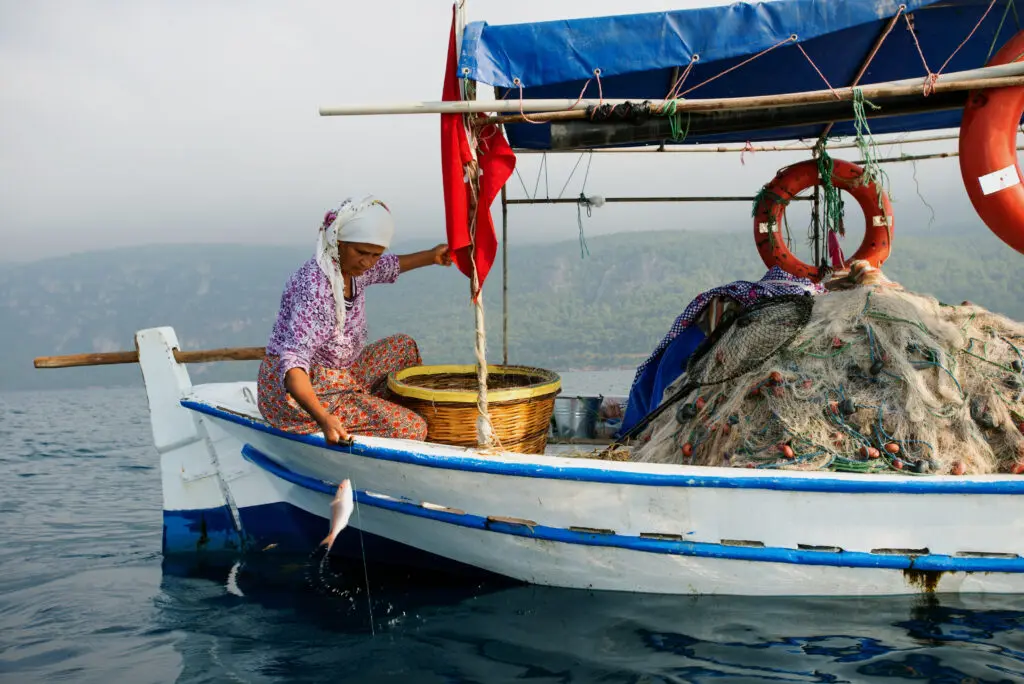
Credit: Zafer Kızılkaya
I know we’re dealing with difficult things, and we must continue. Nature can restore itself with our support. We destroyed it as humanity, and now it’s our turn to support it. Otherwise there will be no future.
Learn more about Mediterranean Conservation Foundation (Akdeniz Koruma Vakfı) here: https://akdenizkoruma.org.tr/en/
Read the foundation’s impact report on the no-fishing zones: https://akdenizkoruma.org.tr/en/reports
Watch: an introduction to the foundation’s Marine Ranger system: https://www.youtube.com/watch?v=Ib1i7PDhEiE&t=35s
Footnote: The Sea of Marmara is the small inland sea between the Black Sea and the Aegean, with around 20 million people living around it. In 2021 a huge bloom of marine mucilage, or “sea snot”, smothered much of its shoreline. It was fuelled by phytoplankton growing on a mix of raw sewage, agricultural runoff and other pollution, and made worse by warming: researchers at Middle East Technical University found the sea had warmed by 2 to 2.5 degrees on average over the previous two decades. The government launched its biggest-ever maritime cleanup and in November 2021 declared the Sea of Marmara a Special Environmental Protection Area. Source: Turkey hoovers up vast blooms of sea snot in biggest ever maritime cleanup & Turkey’s Marmara Sea receives new environmental protection status
The views in this article may not necessarily represent the views of other RISE UP network members or RISE UP as a whole. It is only through open dialogue and a diversity of ideas that we will arrive at the solutions necessary to restore Ocean health.